Reaching the Latino Community with Culturally Relevant Gambling Awareness
A Minnesota Department of Human Services (DHS) grant is helping a Twin Cities broadcaster bring much-needed awareness about gambling addiction to the Latino community through a culturally informed, data-driven campaign.
The five-year grant, renewed annually, supports outreach led by La Raza, which owns two Spanish-language radio stations serving the region. According to president Maya Santamaria, the organization took on the project because the need was clear.
“In our community, there hasn’t been intentional messaging about problem gambling,” she explained. Like other addictions, gambling disorder is often taboo in Latino communities, making it less likely to be discussed openly or addressed early.
Before launching the campaign, Maya and her team met with community leaders to better understand local perspectives and concerns about gambling. They then surveyed the community about their gambling behaviors to get a sense of the extent of problem gambling.
“We wanted data instead of just making assumptions,” says Maya.
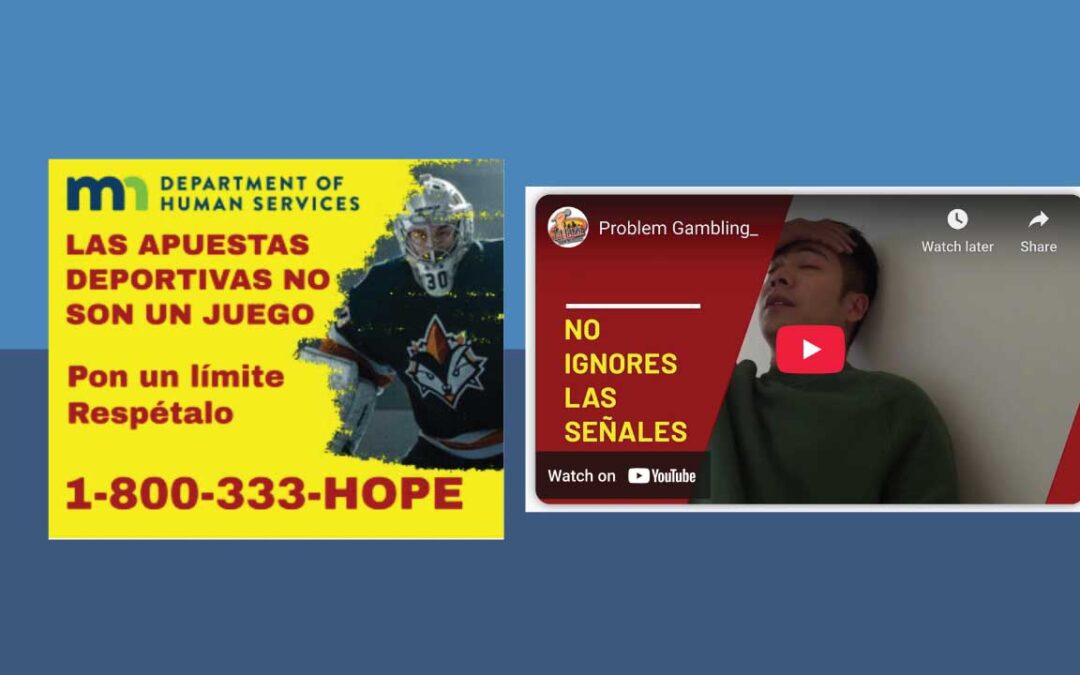
The survey results helped shape a comprehensive public awareness campaign designed to meet people where they are. Outreach includes Spanish-language radio segments, social media content, digital advertising, television placements and messaging in online newspapers. Many materials were translated and adapted from MNAPG resources to ensure accuracy and cultural relevance.
The timing of the campaign has presented challenges. Maya noted concerns that Operation Metro Surge, a period of increased Immigration and Customs Enforcement activity, might distract community members from the messaging. At the same time, she believes the heightened stress and economic disruption caused by the operation may have increased gambling risk.
“Many people lost jobs or income and were experiencing trauma and uncertainty,” she said. “When people are under that kind of stress, they may look for what feels like a quick way to make money.”
The current phase of the project began in January and runs through June. La Raza will use digital analytics and media performance reports to evaluate the reach and effectiveness of the campaign and share the results with DHS.
By combining trusted community voices, culturally responsive messaging and reliable data, the initiative represents an important step toward breaking stigma and ensuring Latino Minnesotans know that help for gambling problems is available and accessible.
By Bill Stein