Apr 10, 2026 | PROBLEM GAMBLING, RESOURCES, SPORTS BETTING, YOUTH GAMBLING
We come across numerous articles about problem gambling and problem gaming. Here are a few:
The article reports that Washington State has sued the makers of the Bingo Blitz app, alleging it operates as illegal gambling and uses child-appealing content, weak age controls and aggressive in-app purchases that expose minors and other users to addiction risks and significant financial harm.
https://gamblingharm.org/bingo-blitz-app-illegal-gambling-children/
The column argues that the growing ubiquity and normalization of gambling—especially through sports betting and youth exposure—risks fostering addiction, financial harm and a cultural shift toward chasing quick wealth through luck rather than stable, meaningful paths.
https://www.startribune.com/brown-when-betting-is-everywhere-we-gamble-with-our-future/601567918
NPR's A Martinez speaks with journalist and author Danny Funt about his new book, "Everybody Loses: The Tumultuous Rise of American Sports Gambling."
https://www.npr.org/2026/01/19/nx-s1-5602138/everybody-loses-chronicles-the-rise-of-americas-sports-betting-boom
A piece by PBS on How Sports Betting is changing our Brains and Behavior, features Danny Funt and Dr. Tim Fong.
https://www.pbs.org/newshour/video/horizons/2026/02/how-sports-betting-is-changing-our-brains-and-behavior
This Teach-Out is open to anyone interested in learning more about the sports betting industry and its effects on the general population, but it is particularly relevant for young adults and their parents, athletes, educators, and policymakers looking to mitigate the effects of sports betting.
https://online.umich.edu/teach-outs/sports-betting-risks-and-ripple-effects-teach-out/

Apr 7, 2026 | PROBLEM GAMBLING, RESOURCES
Sweepstakes casinos have grown rapidly in recent years, offering online slot machines, poker and other casino-style games without describing themselves as traditional gambling. While they are often marketed as “free-to-play entertainment,” their structure has raised questions among regulators, public health professionals and policymakers.
How sweepstakes casinos work
At first glance, sweepstakes casinos look similar to real-money online casinos. Players sign up, choose games and spin reels or play table games. The key difference is the use of a dual-currency system.
Most platforms offer two types of virtual coins:
- Gold Coins – used only for entertainment play and have no cash value
- Sweeps Coins – used for promotional games and can be redeemed for cash or prizes
Players typically receive Sweeps Coins as a bonus when they purchase Gold Coin packages. They may also obtain Sweeps Coins through free methods such as daily login bonuses, promotions or mail-in requests (often called an Alternate Method of Entry). Because there is always a free way to participate, operators argue that no purchase is required.
This structure is designed to avoid the legal definition of gambling, which generally requires three elements: prize, chance and consideration (payment). By offering a free entry option, sweepstakes casinos attempt to remove the “consideration” element.
Why many view them as gambling
Despite the legal framing, critics argue that sweepstakes casinos function much like traditional gambling for these reasons:
- Games rely on chance and offer real-world prizes.
- Players often purchase virtual currency in practice, even if technically optional.
- The purchase of Gold Coins frequently includes bonus Sweeps Coins, which can be redeemed for cash, creating a financial incentive to spend.
Regulators have described the two-currency model as a way to disguise paid gambling activity. In Minnesota, officials noted that consumers who appear to be buying entertainment currency are effectively purchasing access to prize-eligible play.
Research and surveys also indicate that many users participate with the intention of winning money, reinforcing concerns that the experience mirrors gambling behavior.
Legal and regulatory concerns in Minnesota
Minnesota has taken a particularly strong stance. In 2025, the Attorney General ordered multiple sweepstakes casino operators to stop offering services in the state, stating that such platforms may violate gambling and consumer protection laws.
State officials emphasized several risks, claiming:
- These sites operate outside Minnesota’s regulated gambling system
- Most are based out of state or overseas, limiting oversight
- Players lack protections such as fair-play audits, reliable payouts or dispute resolution
Because the activity is unregulated, it also generates no state tax revenue and does not contribute to programs typically funded by legal gambling, such as public services or problem gambling prevention.
Why the issue matters
Sweepstakes casinos exist in a legal gray area nationwide, but Minnesota’s actions reflect growing concern. When casino-style gambling operates outside regulatory frameworks, states lose both consumer safeguards and public revenue, while residents face potential financial and behavioral risks.
For policymakers and prevention professionals, sweepstakes casinos highlight a broader challenge: as gambling-like products evolve online, the line between entertainment and wagering becomes increasingly blurred. Clear regulation, consumer education and ongoing monitoring will be critical to ensure that emerging gaming models do not bypass the protections and public benefits that accompany legal, regulated gambling.

Apr 7, 2026 | PROBLEM GAMBLING, RESOURCES, YOUTH GAMBLING
As legalized sports betting and digital wagering continue to expand, gambling has become a routine part of life for many young adults. For colleges and universities, this shift raises an important question: how can campuses help students make informed choices and avoid gambling-related harm?
Dr. Michelle L. Malkin, assistant professor at East Carolina University, is working to answer that question through The Betting Blueprint, a wellness-oriented curriculum designed specifically for students ages 18–24. Her approach combines screening, education, financial wellness and early intervention to reduce risk and support healthier decision-making.
Start with awareness and screening
One of the key messages from Dr. Malkin’s work is that screening should be ongoing, not limited to a single awareness campaign. While March’s Problem Gambling Awareness Month provides an important opportunity for outreach, students engage in gambling year-round. Ideally, campuses host multiple screening efforts, including events early in the fall semester and again in March when March Madness increases betting activity.
Peer-led outreach has proven especially effective. Students are more likely to participate when encouraged by their peers and when screening is quick and accessible, such as through a QR code completed on a phone. Brief screening tools that use clear language like “betting and/or gambling” help identify students who may be experiencing harm and connect them with resources before problems escalate.
Redefining what gambling looks like
The curriculum challenges students’ assumptions about gambling, as many young adults associate gambling only with casinos or money-based games. In reality, gambling includes any activity involving something of value and an element of chance.
Today’s gambling landscape includes, but is not limited to, sports wagering, fantasy sports, prediction markets, loot boxes, esports, cryptocurrency speculation, in-play betting and social gaming features. By broadening students’ understanding, the curriculum helps them recognize behaviors they might not otherwise identify as gambling.
The curriculum also explores why some individuals struggle to gamble responsibly. For certain people, brain responses to rewards can lead to chasing losses, overconfidence or difficulty stopping. Students learn to recognize warning signs such as borrowing money, hiding gambling or continuing despite negative consequences.
Importantly, the focus is not prohibition. Instead, the curriculum promotes lower-risk strategies for those who choose to gamble: setting time and money limits, avoiding gambling when stressed or emotional, understanding the odds and using responsible gambling tools available on many platforms. Students also learn that gambling harms extend beyond the individual, affecting roommates, partners, family members and others.
Financial wellness at the center
Another important aspect of The Betting Blueprint is connecting gambling decisions to financial health. Many students have limited experience managing money, making them particularly vulnerable to overspending on entertainment, including betting.
Through budgeting exercises and real-life scenarios, students explore what financial wellness means and how to give every dollar a purpose. They learn to identify priorities, track income and expenses, and distinguish between appropriate entertainment spending and high-risk funding sources such as borrowed money, financial aid or credit card debt.
A key point is that gambling winnings should never be treated as income. Activities encourage students to track results over time, understand variability and consider how unexpected wins or loses affect long-term goals. The emphasis is on building habits that support stability and reduce financial stress.
Students as problem solvers
A distinctive feature of the curriculum is its interactive design. Small-group activities ask students to respond to common beliefs, such as “I can win back my losses” or “My gambling is under control.” By researching data and developing peer-focused messages, students generate their own solutions rather than being lectured.
This collaborative approach increases engagement and helps shift campus norms around gambling.
Meeting Students at a Critical Time
College campuses provide a unique environment to reach emerging adults during a formative period. Dr. Malkin’s work highlights the importance of integrating gambling awareness into broader wellness efforts, including mental health, substance use prevention and financial education.
As gambling opportunities continue to grow, so does the need for practical, student-centered prevention. With ongoing screening, peer engagement and a focus on financial and personal well-being, The Betting Blueprint offers campuses a proactive way to help students make informed choices and avoid harm—long before problems take hold.
The information in this article was taken from Dr. Malkin’s presentation at the MNAPG conference last November. For more information about the curriculum, please contact Dr. Malkin at malkinm20@ecu.edu.
Dec 17, 2025 | HEALTHY PLAY, HELP, PROBLEM GAMBLING, RESOURCES, SPORTS BETTING
MNAPG posed questions to Lori Kalani, DraftKings' chief responsible gambling officer to learn more about DraftKings’ problem gambling efforts. Below are her responses:
MNAPG: We understand that My Budget Builder and My Stat Sheet are new responsible gaming (RG) tools for DraftKings. Can you share more about them?
LK: My Budget Builder guides customers through a simple process to set personalized entertainment budgets, reminders and limits. My Stat Sheet provides customers with a clear personalized snapshot of their play activity, including time spent, deposits, withdrawals, wagers and outcomes. Both are designed to help customers make informed decisions and play responsibly.
MNAPG: What information is included with alerts and does anything happen if a customer exceeds the limits they set?
LK: We proactively encourage every player to set budgets for their deposit amounts, play time and size of bets, and we provide access to a range of tools and resources with which they can engage. Customers receive reminders when they approach the limits they’ve set. If a limit is reached, the platform enforces it automatically—for example, preventing additional deposits or gameplay until the current limit resets. Once a limit is set, it cannot be increased or cancelled until the timeframe for the limit has ended. More restrictive limits can be added at any time.
MNAPG: How many customers are currently using some of DraftKings’ responsible gaming tools and resources?
LK: Since launching our Responsible Gaming Center in 2024—a centralized hub for all the DraftKings RG tools and resources available at rg.draftkings.com—more than 5.6 million customers have visited. Approximately 3.5 million unique customers have used My Stat Sheet since the industry-first tool was introduced early last year. This June, we launched our newest tool, My Budget Builder, and we expect usage to increase throughout the NFL season.
MNAPG: How do you help make customers aware that these tools and resources exist?
LK: We highlight responsible gaming tools and resources throughout the customer journey. Some examples include promoting RG tools and resources at onboarding, in-app messaging, emails and various campaigns throughout the year. Within the app and online, an RG shield icon appears at the top of the screen, making the DraftKings Responsible Gaming Center just one click away so that tools and resources are seamlessly available as part of the product experience. To mark this year’s Responsible Gaming Education Month, we launched an NFL sweepstakes that incentivizes customers who use tools like My Budget Builder and My Stat Sheet with the chance to win weekly NFL ticket prizes, culminating in a grand prize trip to the Super Bowl.
MNAPG: Do you work with any external organizations or researchers to improve your responsible gaming efforts?
LK: Yes. We work with organizations such as the Cambridge Health Alliance, BetBlocker, Evive, the Responsible Online Gaming Association (ROGA) and the International Center for Responsible Gaming. Our work with Cambridge Health Alliance includes expanding research on responsible gaming and facilitating new opportunities to educate customers about the tools and resources that are available to help them play responsibly. We also provide funding to the National Council on Problem Gambling. DraftKings’ State Council Funding (SCF) program provides annual donations to 35 state problem gaming councils across the country to support their work. Since announcing the SCF program in 2022, we have donated millions of dollars, including to the Minnesota Alliance on Problem Gambling. (Editor’s note: MNAPG used the funds provided by DraftKings to develop a pilot casino employee training program that’s currently being tested at Canterbury.)
MNAPG: Do you proactively identify customers who may be having challenges? If so, how is this done?
LK: We proactively encourage every player to set budgets for their deposit amounts, play time and size of bets, and we provide access to a range of tools and resources with which they can engage. We use modeling techniques and advanced technology, including machine learning, to help identify when someone may no longer be playing for fun, which is then reviewed by our Responsible Gaming team for further analysis.
MNAPG: Does DraftKings work with the other members of the Responsible Online Gaming Association (ROGA) to ensure that if one of your customers is given a time out or excluded that it is active across all the other platforms?
LK: Today, most jurisdictions where we operate maintain shared exclusion databases, which are distributed to all licensed operators. In some states, operators also contribute their own self-exclusion data. While there isn’t yet an industry-wide system among operators, through ROGA we have announced the creation of a centralized exclusion clearinghouse. The first phase will introduce a national shared self-exclusion list so that when a player self-excludes with one member operator, that exclusion will also extend across all ROGA member platforms.
MNAPG: How do you see your RG tools and resources evolving over the next 2–3 years?
LK: In the next few years, we expect RG tools and resources to further evolve through AI and personalization. Smarter technology will allow these tools and resources to adapt dynamically, making them even more intuitive and seamless to the customer.
MNAPG: How do you measure success in responsible gaming initiatives?
LK: We consider, among other things, adoption rates, customer feedback and independent evidence-based research as we continue to enhance our responsible gaming tools and resources. Success means responsible play continues to be embedded in the DraftKings experience for every customer.

Dec 17, 2025 | RESEARCH, RESOURCES
The National Council on Problem Gambling (NCPG) has released new findings from its National Survey on Gambling Attitudes and Gambling Experiences (NGAGE 3.0), offering an updated picture of how Americans are gambling—and what they believe about gambling.
The first NGAGE survey was conducted in 2018, just as states began legalizing sports betting following a landmark Supreme Court decision that opened the door for rapid expansion across the country. A follow-up survey in 2021 revealed a sharp increase in risky gambling behavior. At the time, researchers weren’t sure whether the spike reflected the spread of sports betting or the stress and isolation from the COVID-19 pandemic.
The 2024 survey, conducted after pandemic restrictions had largely lifted, shows that gambling-related risks have stabilized. About 8% of U.S. adults—nearly 20 million people—reported experiencing at least one sign of potentially problematic gambling “many times” in the past year. That number is down from 11% in 2021 but still higher than the 7% reported before sports betting became widely available.
“While it’s reassuring that the increases in problematic gambling behavior we saw in the 2021 survey seem to have abated along with the easing of the COVID-19 pandemic, maladaptive gambling remains a significant public health problem,” says Don Feeney, who helped design the NGAGE surveys. “Increased efforts at prevention and education are essential if we are to reduce gambling-related harm.”
The survey also sheds light on who is most at risk. Younger adults, men, online gamblers and sports bettors were among the groups most likely to report signs of risky play. Those who gamble frequently or participate in many different gambling activities are especially vulnerable.
“The best predictors of a gambling problem aren’t participation in any particular form of gambling,” explains Don. “Instead, the best predictors are the intensity of gambling involvement—how frequently someone is gambling—and the breadth of involvement—how many different forms of gambling someone is involved with.”
Even as legalized sports betting has expanded to 39 states, Washington, D.C. and Puerto Rico, the overall share of Americans placing sports bets has remained steady at about 23%. However, the ways people are betting are changing. The number of sports bettors making parlay bets—wagers that combine multiple outcomes for the chance of a large payout—has nearly doubled since 2018. Researchers note that these types of bets can be especially appealing to those trying to “win back” losses quickly, a pattern often associated with risky play.
Another key finding involves public attitudes toward gambling addiction. While nearly three in four adults agree that gambling addiction is similar to drug or alcohol addiction, fewer than 40% consider its consequences “very severe.” Many still believe gambling problems stem from a lack of willpower or moral weakness rather than recognizing them as treatable health conditions.
There is, however, some encouraging progress. Awareness of problem gambling helplines has increased, and most people understand that helplines exist to help people struggling with gambling problems.
“We’ve learned that we can improve awareness that there’s help for a gambling problem, and that awareness is greatest among those most in need of receiving services,” says Don. “However, these are the same people who are most skeptical that treatment works. We need to make the effectiveness of treatment an integral part of our message.”
Despite the progress, challenges remain. Public funding for problem gambling services has increased—from about $80 million in 2018 to $134 million in 2023—but seven states still provide no funding at all. On average, states spend just 35 cents per resident on prevention, education and treatment programs.
Continued investment and public awareness are critical to preventing gambling-related harm. Prevention and education work, but more people need to understand that help works too—and that recovery from gambling problems is possible.
The survey underscores that even as gambling becomes more common, many people still misunderstand the risks. Open discussion about gambling addiction, promoting the effectiveness of treatment and making help easy to find is necessary to keep gambling a form of entertainment rather than a source of harm.
Jun 18, 2025 | RECOVERY, RESOURCES
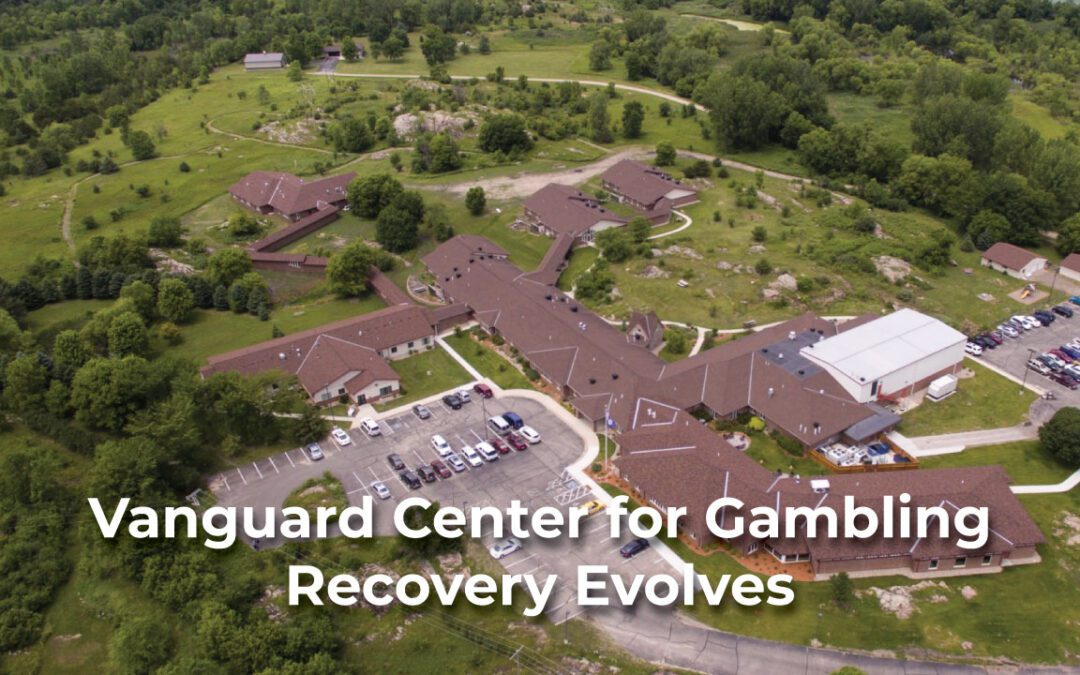
After more than 30 years, the Vanguard Center for Gambling Recovery in Granite Falls,
Minnesota’s only residential program for problem gambling and one of only a handful of such programs in the nation, continues to grow and involve. Northern Light sat down with Steph Almanza, unit coordinator for Vanguard Center for Gambling Recovery, to learn more about how the program is evolving to help gamblers and their affected others.
NL: What is the approach you employ when treating problem gamblers?
SA: At Project Turnabout, a holistic approach to gambling recovery is at the core of our programming. Gary Van Eps leads individuals through a foundational 12-step group that explores each step in depth. This group setting encourages participants to examine their experiences with powerlessness related to gambling, while also addressing ego, character flaws and the role of spirituality in their recovery journey. Spiritual support is further provided through dedicated sessions on grief, loss and spirituality by Chaplain Robert Skjegstad. Additionally, recreational therapy is offered daily as a structured part of the healing process, helping clients rediscover joy and build healthy coping strategies.
Our program is rooted in cognitive behavioral therapy (CBT), which has a strong evidence base for addressing both substance and behavioral addictions, including gambling. A core component of CBT involves identifying and restructuring cognitive distortions and negative automatic thoughts, unhelpful patterns of thinking that often reinforce gambling behavior, minimize consequences and drive emotional distress. Through this approach, clients gain the insight and tools needed to respond differently to emotional triggers, rather than reverting to gambling as a coping mechanism.
NL: What role does shame play in diagnosis and treatment?
SA: We spend a lot of time exploring shame, as it can be a significant barrier to healing. Many clients experience shame not just for their actions, but as a reflection of who they believe they are. Without addressing shame, it can become a hidden driver of relapse. By teaching the difference between guilt and shame, and encouraging clients to develop self-compassion, we support a more sustainable and forgiving path toward change.
As part of this process, clients also learn when and how to apply coping skills, shifting from reactive patterns to more intentional behaviors. We help them build emotional regulation skills that are applicable both inside and outside of treatment.
NL: What else do you focus on?
SA: We also focus heavily on communication and boundaries. These skills are essential for long-term recovery and for repairing the relational harm that often accompanies gambling addiction. Clients explore past patterns of people-pleasing, avoidance, dishonesty or conflict, and learn to set healthy boundaries with themselves and others. These relational tools not only support accountability but also reduce the likelihood of returning to toxic dynamics that may trigger relapse.
NL: How do you incorporate family into the treatment process?
SA: We provide dedicated family sessions, as gambling rarely impacts the individual alone. Loved ones are often affected by broken trust, financial loss and emotional trauma. Family work helps reestablish communication, set healthy expectations and create a supportive post-treatment environment—one where both the individual and their support system can continue to heal together.
NL: What else is on the horizon for Vanguard?
SA: Recognizing the lack of resources in rural areas, Project Turnabout has established Growth Group, a monthly alumni meeting held on the third Saturday of each month. This group invites former clients—who are at least six months post-treatment—to return, share progress, discuss challenges and offer peer support to current participants. This continuity fosters a strong sense of community and ongoing accountability.
NL: What kind of practical emphasis is provided to clients?
SA: In addition to emotional and spiritual care, the program places a strong emphasis on mental health and practical life skills. Clients receive weekly one-on-one therapy sessions and can consult with a psychiatrist for medication management, if needed. Financial education is also a vital part of the curriculum, covering budgeting, debt management and connection to relevant community resources.
The program also integrates practical tools to aid in relapse prevention. One such tool is Gamban, an online self-exclusion service for individuals seeking to block access to gambling websites. For those looking to exclude themselves from physical gambling establishments, staff provide hands-on support to navigate this often-complex process. This includes assistance with completing self-exclusion forms, gathering required identification, securing notarization and submitting documents by mail. Clients are also guided through the additional step of contacting casinos to stop promotional mailers, emails and other marketing communications—all common relapse triggers.
Together, these services create a comprehensive, compassionate framework to support lasting recovery from gambling addiction.
Vanguard Center for Gambling Recovery is a residential program solely for those suffering from problem gambling. The Center provides men and women aged 18 and older with the tools necessary to begin their process to recovery from gambling and discover some of the obstacles in their lives that may challenge long-term recovery. For more information, visit https://www.projectturnabout.org/treatment/gambling-recovery/vanguard.