
Reaching the Latino Community with Culturally Relevant Gambling Awareness
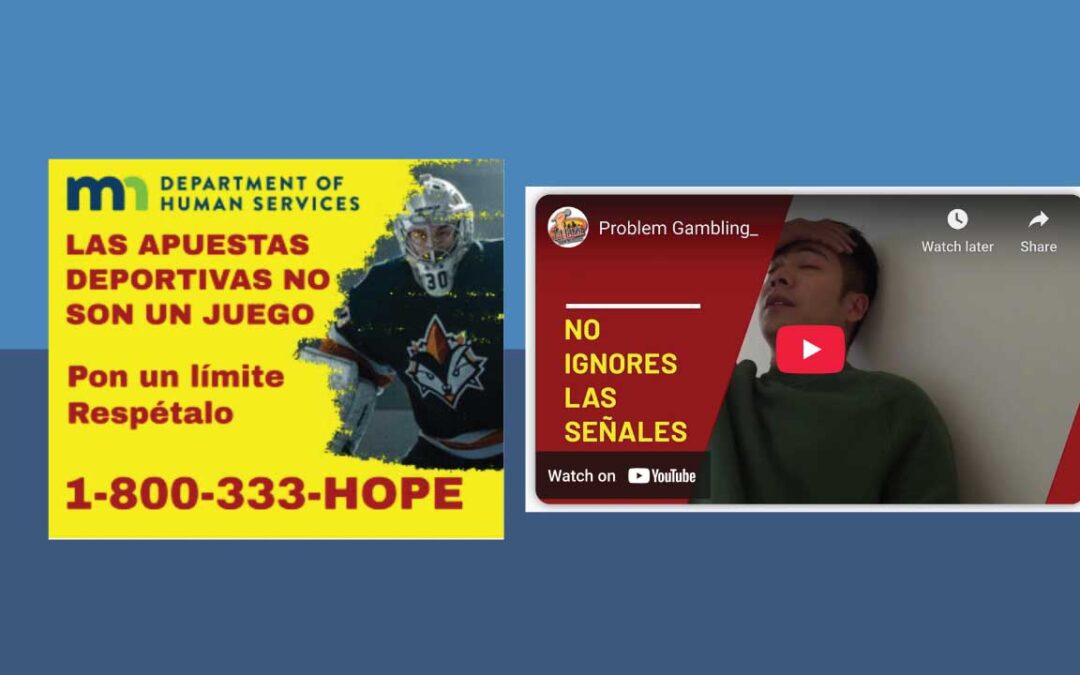
A Minnesota Department of Human Services (DHS) grant is helping a Twin Cities broadcaster bring much-needed awareness about gambling addiction to the Latino community through a culturally informed, data-driven campaign. The five-year grant, renewed annually, supports outreach led by La Raza, which owns two Spanish-language radio stations serving the region. According to president Maya Santamaria, the organization took on the project because the need was clear. “In our community, there hasn’t been intentional messaging about problem gambling,” she explained. Like other addictions, gambling disorder is often taboo in Latino communities, making it less likely to be discussed openly or addressed early. Before launching the campaign, Maya and her team met with community leaders to better understand local perspectives and concerns about gambling. They then surveyed the community about their gambling behaviors to get a sense of the extent of problem gambling. “We wanted data instead of just making assumptions,” says Maya. The survey results helped shape a comprehensive public awareness campaign designed to meet people where they are. Outreach includes Spanish-language radio segments, social media content, digital advertising, television placements and messaging in online newspapers. Many materials were translated and adapted from MNAPG resources to ensure accuracy and cultural relevance. The timing of the campaign has presented challenges. Maya noted concerns that Operation Metro Surge, a period of increased Immigration and Customs Enforcement activity, might distract community members from the messaging. At the same time, she believes the heightened stress and economic disruption caused by the operation may have increased gambling risk. “Many people lost jobs or income and were experiencing trauma and uncertainty,” she said. “When people are under that kind of stress, they may look for what feels like a quick way to make money.” The current phase of the project began in January and runs through June. La Raza will use digital analytics and media performance reports to evaluate the reach and effectiveness of the campaign and share the results with DHS. By combining trusted community voices, culturally responsive messaging and reliable data, the initiative represents an important step toward breaking stigma and ensuring Latino Minnesotans know that help for gambling problems is available and accessible. By Bill Stein
MNAPG’s 2026 PGAM Media Efforts
March is Problem Gambling Awareness Month, and this year MNAPG staff spent the month sharing information about problem gambling as a public health issue across Minnesota and beyond. From radio and TV interviews to newspaper features and podcast appearances, we reached communities statewide with resources, warning signs and support options.
Here is a recap of our media appearances throughout the month:
Radio WCCO Radio (Appearance 1) — March 3, 2026 WCCO Radio (Appearance 2) — March 16, 2026 WDKE — March 16, 2026 MPR — March 23, 2026
Television KVRR — March 4, 2026 St. Cloud Live — March 7, 2026 WCCO-TV — March 9, 2026 KAAL-TV— March 19, 2026 KTTC-TV— March 20, 2026 FOX — March 20, 2026 (segment begins at 12:10)
Online and Print WCCO Online — March 19, 2026 Grand Rapids Herald Duluth News Tribune (Letter to the Editor) — March 26, 2026
Podcasts StribSports Daily Delivery, Star Tribune — March 19, 2026 Susan Sheridan Tucker joined host Michael Rand to discuss prediction markets and why platforms operating like sports betting sites are accessible even in states where sports betting is not yet legalized. MPR News Presents — March 23, 2026 Host Catharine Richert and guests explored the impact of online sports betting and prediction markets on Minnesotans.
Fall Conference Takeaways
MNAPG attended two conferences in October: the mid-year Indian Gaming Association (IGA) conference and the International Center for Responsible Gaming (ICRG) conference. Here are some takeaways. Indian Gaming Association Conference At the IGA, the focus was on the growing concern about prediction markets and casino sweepstakes—and the impact these unregulated, untaxed platforms could have on tribal revenues. Legalized gambling, whether you agree with it or not, has allowed Minnesota tribal nations to expand and diversify their economies and provide a wide range of services to their communities. These market disrupters are viewed as existential threats to tribal sustainability and independence. (Editor’s note: As of November 5, 2025, the Minnesota Attorney General’s office sent cease-and-desist letters to 14 illegal gambling operators—sports betting and casino sweepstakes.) The American Gaming Association also recognizes the threats these new platforms pose—not only to gambling revenue but also to consumer protection. Our current federal anti-regulatory environment could significantly change how people engage with gambling. By redefining gambling as a commodity and placing it under the Commodity Futures Trading Commission (CFTC), these platforms may create a stronger illusion of control—skill rather than luck. This illusion is a common fallacy among gamblers, especially sports bettors. Mislabeling gambling products as “trading” blurs the line between investing and gambling, putting consumers at risk. The way these platforms target young adults is particularly troubling. They are designed for continuous, habit-forming engagement, with no guardrails or risk warnings. The discussions were sobering and, for MNAPG, highlighted yet another area where we need to pay close attention and raise awareness within the community and among policymakers. International Center for Responsible Gaming Conference The ICRG conference, a day and a half of research reveals, provided an opportunity to hear firsthand the latest findings in responsible gambling, explore emerging tools and regulatory practices, and discuss the growing integration of responsible gambling principles into the broader gambling landscape. While much work remains, I’m encouraged by the shift among some operators to place greater emphasis on consumer protection. Our advocacy efforts at the national and state levels are having a positive impact, and we need to continue being the thorn in operators’ sides. One session examined the connection between gambling literacy and financial literacy and the need to evolve both so that users understand how risky behaviors can develop through new mediums like digital finance, investment platforms and social media. Another session focused on artificial intelligence and emphasized that AI should amplify human insight, not replace it. Advances in AI may eventually enhance early risk detection and enable personalized responsible gambling interventions—but only if we eliminate bias and uphold the highest standards of privacy protection. Finally, researchers studying youth emphasized the need to create relatable prevention materials and deliver them in the spaces where young people actually spend their time, rather than where we think they should be. They also highlighted the importance of developing prevention programs that account for gender, age and cultural identity.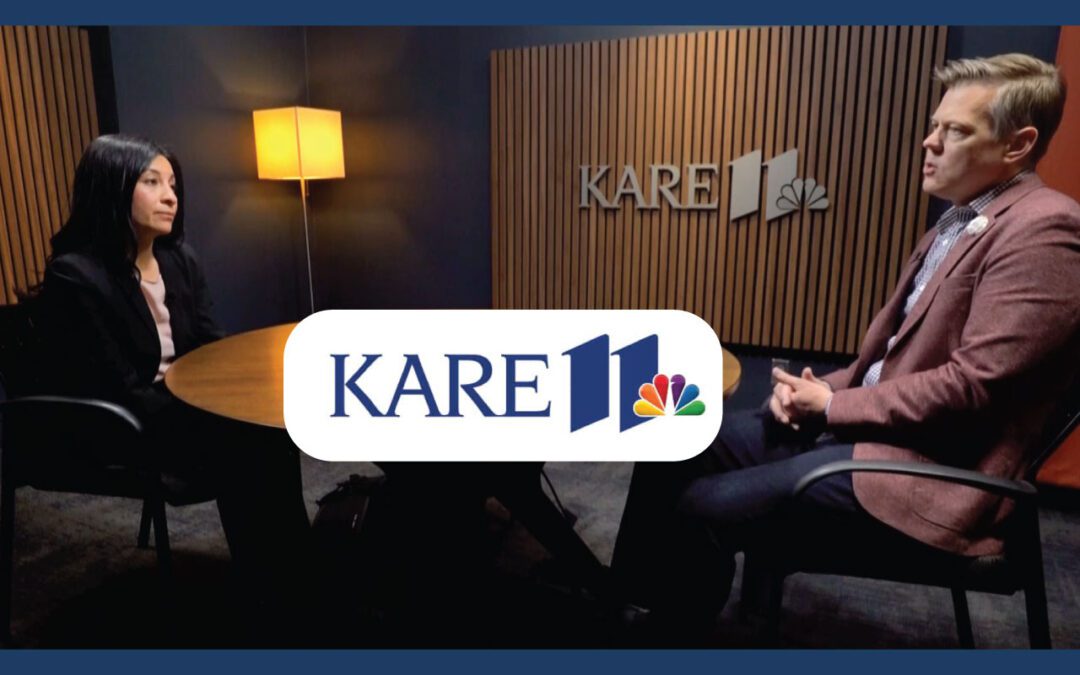
Youth Gambling Explored on KARE11
The increasing concern over youth gambling was explored in May in a KARE11 story. The segment featured Susan Sheridan Tucker, MNAPG executive director, and Serena King Ph.D., professor of Psychology at Hamline University, with whom MNAGP has partnered on several projects. The news story cited “Frequent and Problem Gambling in Public School Students,” a letter (study) which examines data from the 2022 Minnesota Student Survey, a large-scale, statewide study of middle and high school students that takes place every three years. A key finding of the research was that Minnesota students, like Minnesotans at large, are finding ways to gamble, even as sports gambling officially remains illegal in the state. The letter noted that nearly 8% of 8th, 9th and 11th grade Minnesota public school students reported gambling once a week or more. Given that the underlying data is three years old—and with gambling appearing to experience a steady rise—it’s logical to conclude that youth gambling participation may be even higher now. Dr. King’s research found that 88.6% of those considered “frequent gamblers” (students gambling once or more per week) and 89.2% of those considered “problem gamblers” (gambling in the past year and scoring a 4 or more on the Brief Adolescent Gambling Screen) gambled on informal sports and games. This category included betting on informal games of personal skill, such as playing cards, video games, pool, golf, etc. Frequent gamblers were considerably less likely to gamble on formal sports/games (official sporting events, including esports), lottery and scratch-offs, online (including loot boxes) and at casinos. "I think what it tells us is it's culturally embedded in our community," says Dr. King, who has studied youth gambling and problem gambling for 20 years. She says the data clearly shows that mental health and health care providers should be screening kids who report that they are gambling or if families mention that their child is betting in any way. “If a child is wagering or engaging in micro transactions inside video games or on Youtube, those platforms could lead a child to gamble,” says Dr. King. “These are areas where physicians and mental health providers might be wise to have a conversation and use a screening tool.” It’s important to teach children and families that sports betting is pervasive and could lead a child to engage in problem gambling behavior, as kids likely do not have the capacity to understand risks they’re taking. In the KARE11 story, Susan emphasized that many people treated for gambling addiction were first exposed to gambling as young kids, highlighting the need to monitor youth gambling and provide appropriate education and prevention messaging. MNAPG will be contracting with Dr. King for an updated study later this year that will compare 2022 data to 2025 data.