Aug 13, 2021 | ADVOCACY
Minnesota Sports Betting
The 2021 Minnesota legislative session saw three sports betting bills introduced. None made any significant progress, as Minnesota tribes were not currently supportive of negotiating a new compact.
Charitable Gambling
Near session-ending legislation was introduced by the Minnesota Indian Gaming Association (MIGA) to ensure electronic pull-tab and bingo games comply with the intent of the 2012 authorizing statute, which permitted electronic versions to mimic the paper games. However, MIGA contests that over time, pull-tab and bingo game design has evolved closer to mimicking games that are supposed to be exclusive to tribal gaming. Additionally, these charitable gambling games have grown quite popular and have significantly increased generated revenue for the state, charitable entities and for the bars and restaurants that offer them. The bill’s intent is to respect the intent of the original 2012 statute. The bill did not pass this session. (Full disclosure: NPGA receives ½ of 1% of the tax revenue generated from pull-tabs. Representatives from MIGA and Allied Charities are both members of our board of directors.)
Aug 13, 2021 | ADVOCACY
The following legislative update regarding sports betting developments across the country was prepared by Patrick Willard, Director of Policy and Advocacy for the National Council on Problem Gambling.
As lawmakers headed into the Memorial Day holiday, Connecticut, Florida, and Nebraska passed sports betting proposals and boosted the total number of states with gambling expansions to 30 since the Supreme Court’s decision in Murphy v. NCAA three years ago.
At the Buzzer
The Nutmeg State completed action just before midnight on May 25 when the Connecticut Senate adopted the sports betting proposal that was hammered out between Gov. Ned Lamont and the Mashantucket Pequot tribe and the Mohegan tribe earlier in the year. The legislation included an additional $1 million in funding from the state lottery for the state’s Chronic Gamblers Fund, and codified the $500,000 contribution from the tribes to the fund.
The agreement must be approved by the U.S. Department of Interior pursuant to the Indian Gaming Regulatory Act before it will be official. The Connecticut plan is the third passed in this year’s legislative sessions involving an agreement between a governor and state tribes. The other agreements were in Arizona and Florida.
Cornhusker college games won’t be on the board, but Nebraska ended up including sports betting in implementing the referendums adopted by voters in 2020. There will not be online sports betting, but it will be allowed in brick and mortar casinos. The legislation also included dedicated funding of 2.5 percent of revenues for the Compulsive Gamblers Assistance Fund, which is estimated to generate $1.2 million per year beginning in fiscal year 2022.
In Overtime
Florida lawmakers were nearing the end of their regular session just as Gov. Ron DeSantis announced a new compact with the Seminole Tribe that would open up sports betting and online gaming to the Sunshine State. Legislators decided to take up ratification of the compact in a special session rather than try to cram it into the final week of the session.
The new compact makes no apparent changes in the current level of funding for problem gambling funds for the state despite greatly expanding gambling opportunities. As presented, it would maintain the annual donation by the Seminole Tribe to the Florida Council on Compulsive Gambling of $250,000 per facility. The compact will now need approval from the U.S. Department of Interior.
On the northern end of the East Coast, Maine’s legislature is also in a special session. Lawmakers hope to avoid the outcome in 2019 when a proposal was vetoed by Gov. Janet Mills. If no agreement is reached in the next week the measure may move to the legislature’s 2022 session.
The Clock Ran Out
Three states that began sessions with momentum for sports betting proposals ran out of steam before adjournment. Alabama, Missouri and Kansas all ended their sessions with bills looking for votes. In Alabama and Kansas the legislation passed in one chamber, but was unable to move in the other. That brings to nine the number of states (AL, GA, HI, KS, KY, MO, ND, SC, VT) where bills were introduced but failed to pass this year. It is expected that Texas will join this list when it adjourns at the end of the month.
No Picnic
Meanwhile, one state was experiencing a belly ache after gobbling up its first gambling expansion in 2019. The Volunteer State passed its sports betting law without the benefit of any experience with casinos, racetracks or other brick and mortar gambling experience. This year, some Tennessee lawmakers thought the state bit off more than it could chew. They decided to turnover regulation of its sports betting laws to an advisory council after hiccups in the oversight of operators by the state lottery earlier in the year.
Still In-Play
Legislative sessions are wrapping up, but will continue into June for Louisiana, Massachusetts and Ohio. Louisiana lawmakers are moving forward with sports betting legislation that was approved by voters in a 2020 referendum. A measure setting tax rates for the operators has passed both chambers and a second bill putting the wagering regulations in place is awaiting adoption in the House to move to the governor.
In Ohio, a comprehensive expansion of gambling options from the Select Gaming Committee is running into opposition from sports teams and others who feel the requirements of the legislation would limit their ability to take part. The Problem Gambling Network of Ohio continues to speak out on responsible gambling issues before the panel as it heads to consideration by the end of June.
Massachusetts lawmakers are looking at budget amendments that may include additional sports betting revenue. More than a dozen sports betting bills have been filed, but no hearings have been held on the legislation in the Bay State on specifics of gambling expansions. Gov. Charlie Baker supports sports betting, but lawmakers have been unable to agree on how it could be implemented.
Aug 9, 2021 | ADVOCACY
For the next several issues of Northern Light, we’ll profile organizations that have received grants from Minnesota’s Department of Human Services (DHS) and detail how they are using them to increase awareness about problem gambling. Our first feature focuses on the Minneapolis Neighborhood Youth Academy.
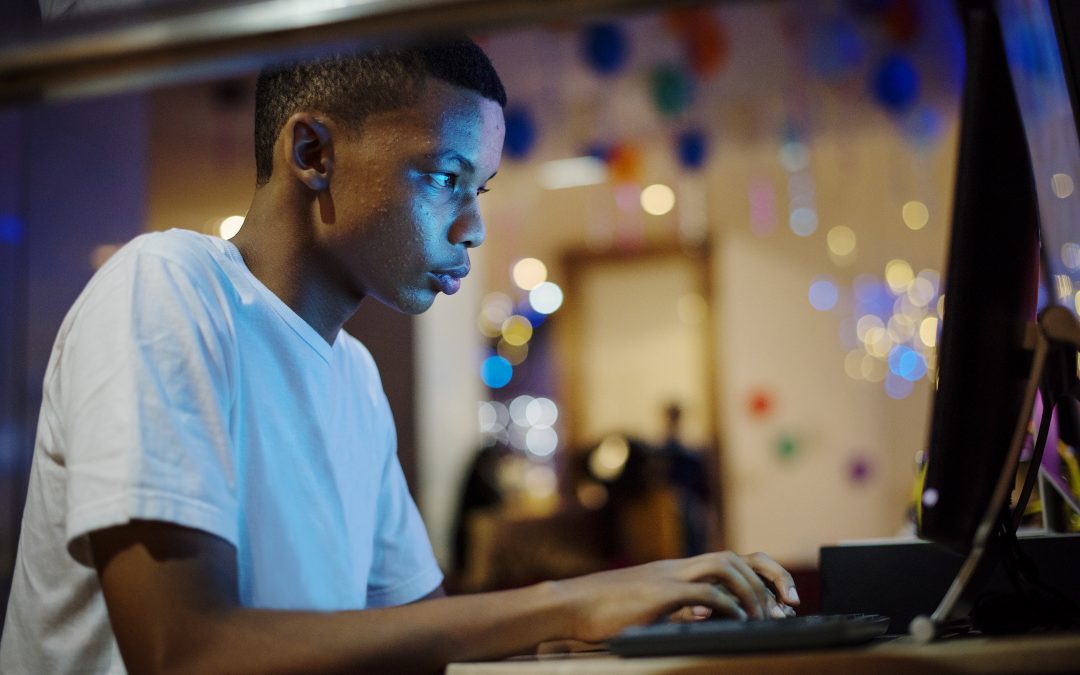
The Minneapolis Neighborhood Youth Academy (MNYA) is taking a three-pronged approach to their efforts to raise awareness about gambling to youth of color in North Minneapolis.
The first part is the creation of a video, released on Memorial Day weekend, that focuses on the concept of risk and making good choices. The video is viewable on https://justaskmn.org/ and was produced in collaboration with Danami, Russell Herder, Minnesota Prep Academy and the Minnesota DHS.
The second phase involves distributing the video through social media so that it reaches youth in the way they access information using their devices — everything from TikTok to Facebook. In addition to raising awareness, the goal is to start a conversation about gambling and related choices.
The third phase of the work will be the creation of a curriculum that goes with the video and for MNYA to become the entity that connects people to the help they need. This is in response to the fact that many websites detail problem gambling from an adult perspective rather than a youth perspective. This will include a youth-led focus group so that more information can be gained about what youth are doing with sports betting. The perspective will not be just with casinos, shooting dice, dominos, etc., but will also include how youth are accessing sites such as FanDuel.
“The grant has been wonderful for us as a starter,” says Donnell Bratton, founder and executive director of Minnesota Preparatory Academy. (The Minnesota Preparatory Academy is partnering with the Minneapolis Neighborhood Youth Academy.) It’s really allowed us to raise awareness about gambling to youth of color in North Minneapolis.
An unexpected benefit has been that the work has helped educate adults about what young people are experiencing. “We didn’t know it would turn out like this, so we’re really excited. This has given us a much deeper appreciation for how gambling can affect young people for the future,” says Donnell. “We heard so many stories we didn’t really expect, such as some kids thinking about gambling to provide money for their mother.”
One important eye-opener for youth was learning that they jeopardize sports scholarships if they participate in sports betting. Some can also lose jobs if they are caught gambling.
In partnership with other community organizations, the information learned from MNYA’s gambling awareness efforts is also being communicated to other at-risk groups, including Asian Americans through Asia Media Access.
Jun 2, 2021 | ADVOCACY, PROBLEM GAMBLING, STORIES
I never gambled — or really knew much about it — until a friend suggested we go out and gamble for fun. We were both looking for a way to escape our hurts. I had just gotten divorced from an alcoholic husband and my friend had recently become a widower. I also suffered depression associated with MS, and a gambling outing helped me escape that.
Gambling allowed us to forget about everything. I didn’t have to talk to anyone. I started with maybe $60 per outing but
it escalated. Eventually, I couldn’t stop. I would always need another $100 bill. My friend (who later became my second husband) could sometimes go home making a few hundred dollars, but I never could.
I would gamble for any reason — to celebrate a good day or to help raise my spirits from a bad day. Eventually, after 11 years of gambling, I started thinking I had a gambling problem. I told my husband that I thought I had a problem, but he didn’t believe me. Neither did my in-laws, whose vacations frequently included considerable amounts of gambling.
Once I determined I needed help to keep me from gambling, I explored options. I was hesitant to join a group because I had a poor experience with Al-Anon back when I sought ways to cope with my then- husband’s alcoholism.
I ultimately found a program online that I ordered for $99. I figured I could do the program in the privacy of my own home and figured it had to have value given its cost.
Unfortunately, not being particularly savvy with computers, I needed help setting up the program. I didn’t expect that the person I would call for computer help would be a therapist, but that’s what happened. The person I ended up talking to, Dawn, would become the therapist who would lead me out of the darkness of gambling addiction.
After helping get the program set up, Dawn gently asked some additional questions. Why did I want the program? How serious was I? Had I looked into alternatives? Dawn then said she would check on me in a few weeks to see how I was doing. That started us down the path of telephone counseling, something she was able to get covered by insurance.
I really connected with Dawn, and found myself wanting to follow the program because I didn’t want to disappoint her. She was also the first therapist I had who knew anything about gambling and could explore the connection between gambling and depression.
One thing that I’ve learned about gambling addiction that’s different from other addictions is the randomness of the reward. Someone who drinks or uses drugs knows the impact it will have on them — they will get drunk or high. But gambling is so unpredictable. You could do five spins and win hundreds or lose hundreds. That unpredictability is something gambling addicts love.
I am doing well in my recovery. I lost my second husband to cancer but have not gone back to gambling. I have worked too hard to throw away my freedom from gambling.
COVID, and the related restrictions, has also actually helped me. Even when things reopened, my husband and I were too afraid to go back to the casinos.
As part of my recovery, I told my adult children about my gambling problem. That was a big deal to me. It feels so good to spend the money that I previously spent on gambling on my children and grandchildren instead. I take them out for dinner, get them birthday gifts and spend more time with them. That, not gambling, now means the world to me.