
Nov 29, 2023 | ABOUT MNAPG, ADVOCACY
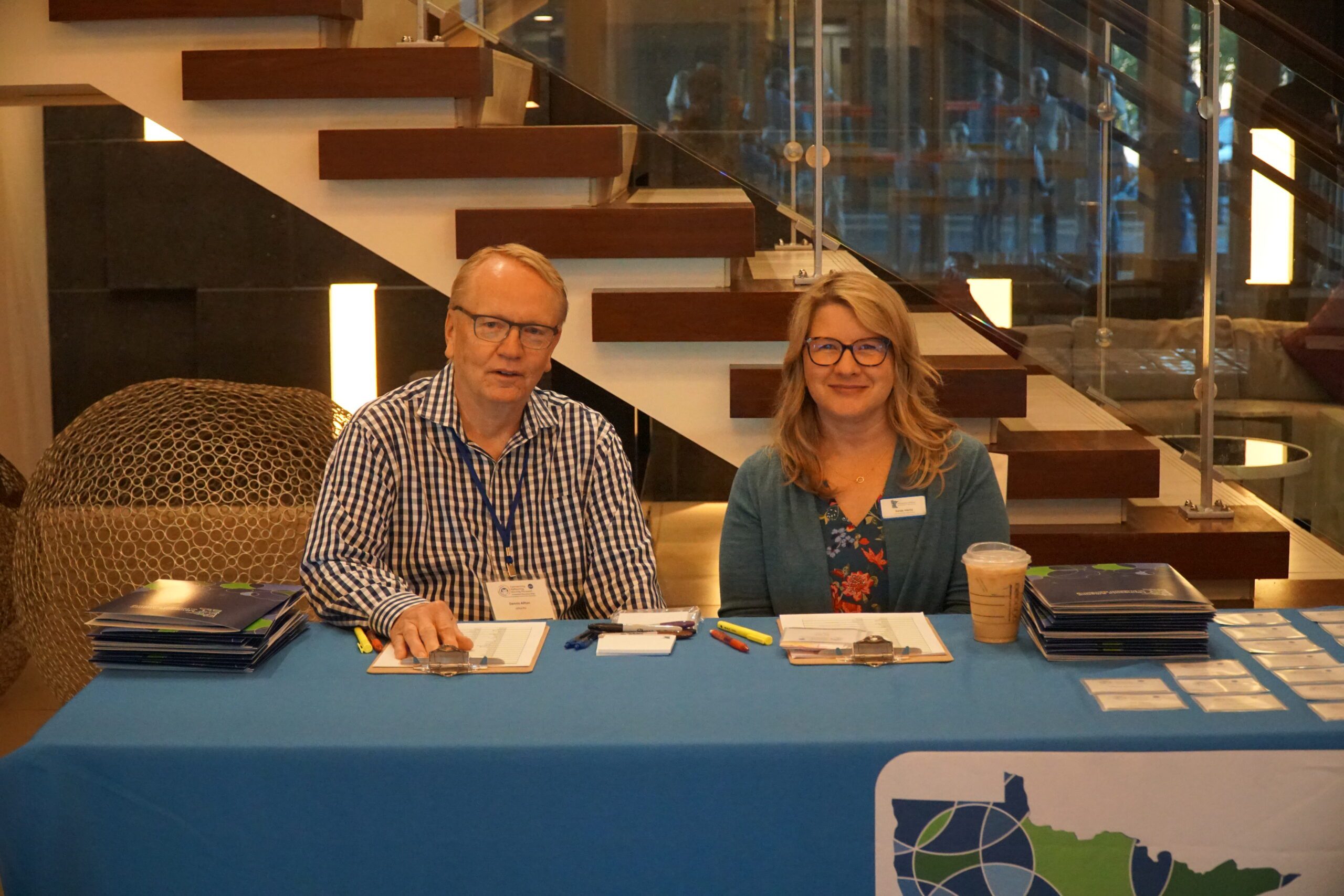 Sonja Mertz, MNAPG community educator, and volunteer Dennis Alfton prepare to welcome conference registrants.
 Cara Macksoud, CEO of Money Habitudes, and Alex De Marco, founder and CEO of MoneyStack, discussed the financial challenges facing problem gamblers. This included bringing awareness of financial counseling resources and tools available to support clinical work with clients, as well as learning how to use an assessment tool to have better conversations about money with clients.
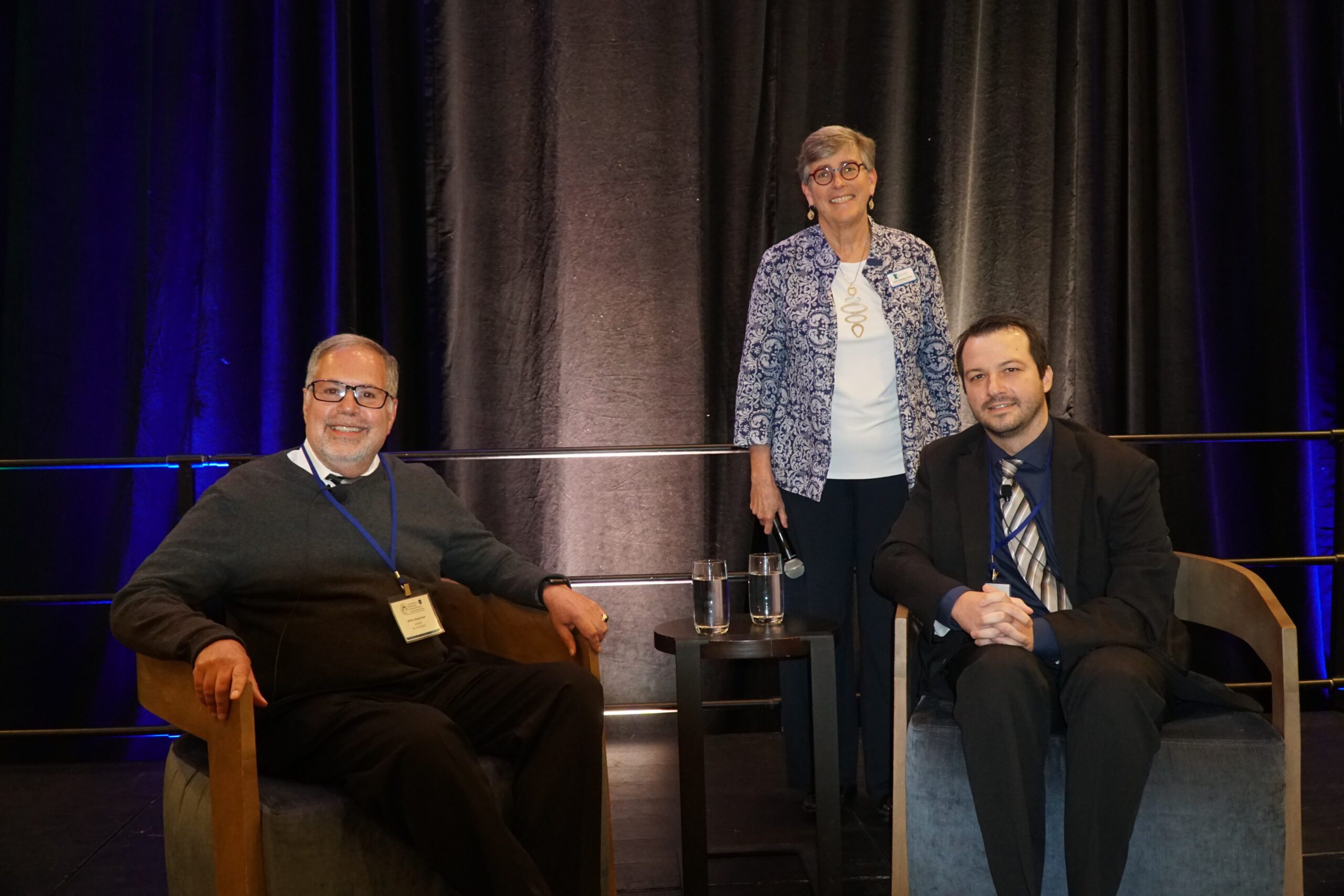 Susan Sheridan Tucker, executive director of MNAPG, welcomes Jeffrey Wasserman (left), judicial outreach and development director for the Delaware Council on Gambling Problems, and Brian Hatch, peer recovery specialist for Bettor Choice. Jeffrey and Brian, cohosts of The Addicted Gambler’s Podcast, made a live recording of the podcast and touched on a wide range of problem gambling issues with an emphasis on lived experience.
 Timothy Wong, MD, a professor of Psychiatry at the Jane and Terry Semel Institute for Neuroscience and Human Behavior at UCLA, gave two presentations. The first looked at cultural values of gambling among Asian American Pacific Islanders (AAPI) that contribute to gambling and problem gambling. The second presentation examined how the rapid expansion of sports betting has and will impact a person’s mind, body and brain functioning.
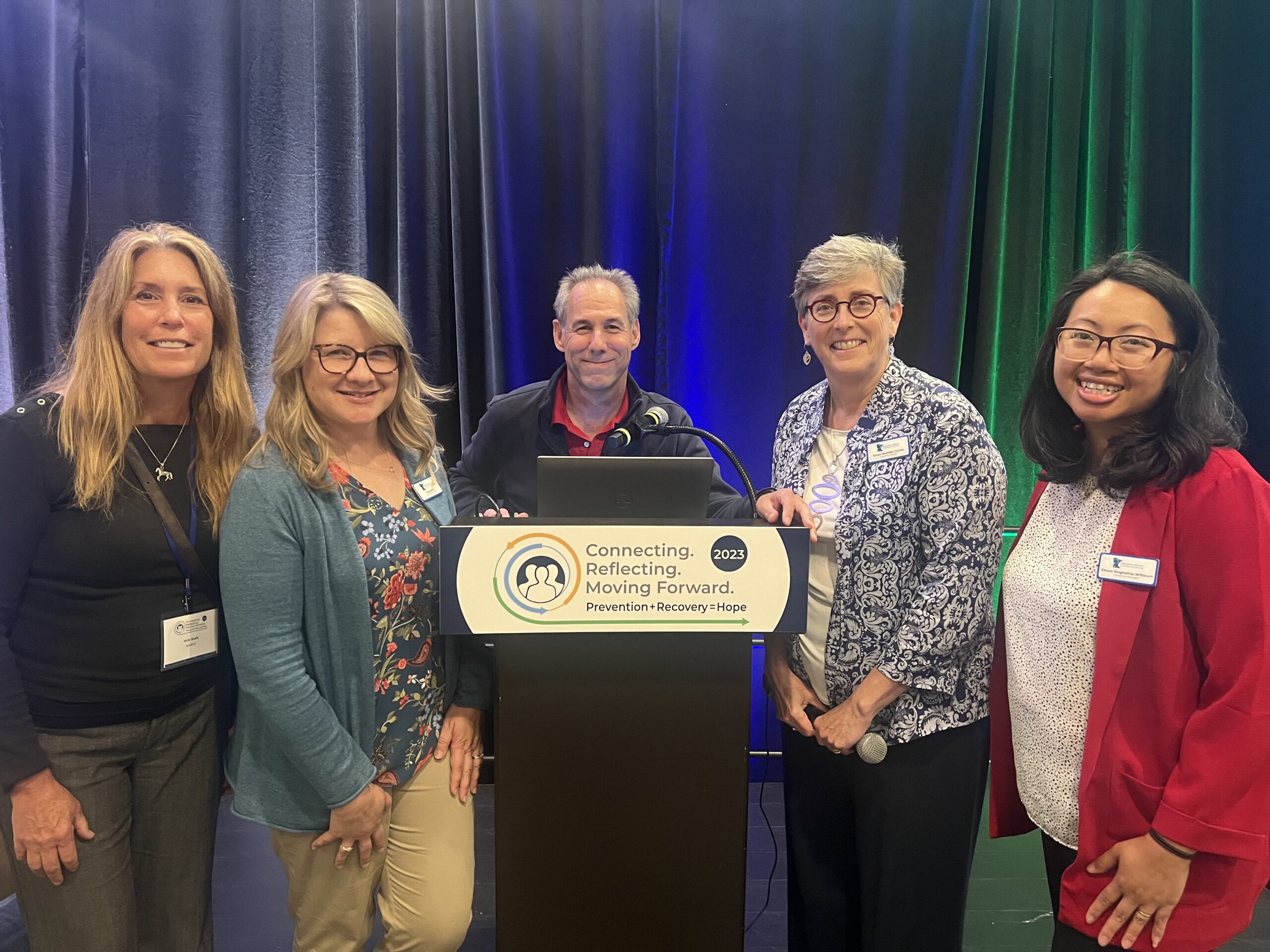 MNAPG staff gathered at the end of the conference. From left to right: Vicki Stark, contract designer, Sonja Mertz, MNAPG community educator, Bill Stein, contract writer, Susan Sheridan-Tucker, MNAPG executive director, and Eboun Wilbourn, MNAPG operations manager.
If you missed the conference or would like to take another look at a presentation, visit mnapg.org/conference, where you’ll find recordings of most of the presentations.
Nov 29, 2023 | RECOVERY
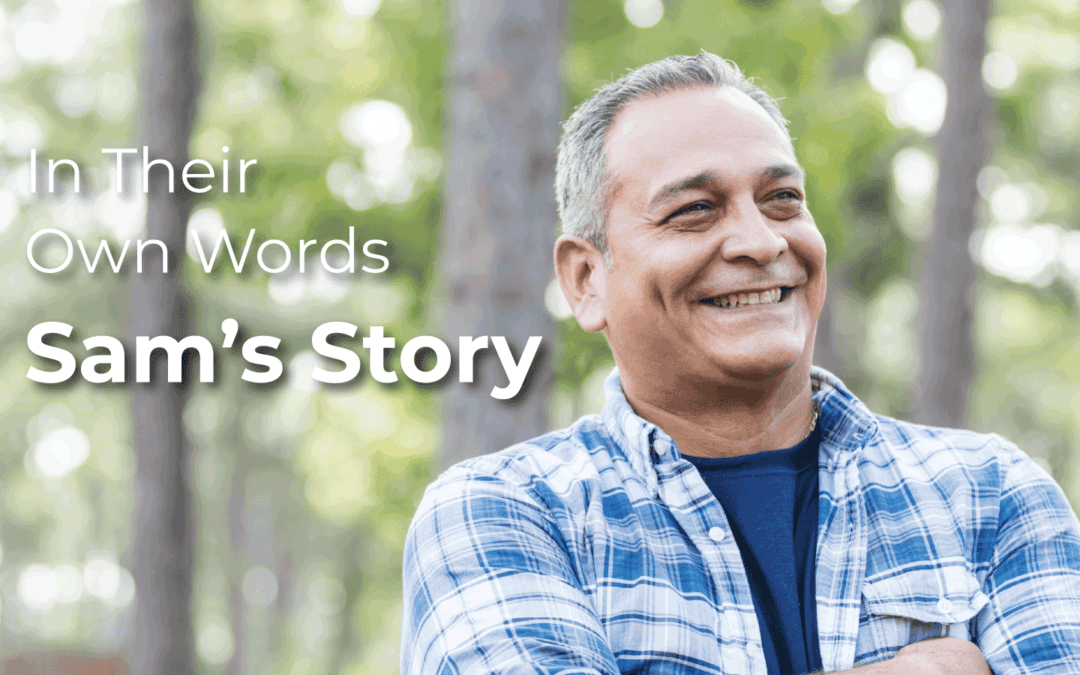
Looking back on it, my desire for gambling was sparked when I was a kid going to carnivals. I couldn’t do enough to win that goldfish or that toy. Little did I know that that insatiable urge would eventually find me sleeping in a casino parking lot on my motorcycle – homeless, jobless and broke.
My dad was always a gambler and a drinker, and I guess that’s just the way I was raised. It all seemed a part of life. My dad would play poker with friends at Christmas and I wanted to play. Instead, I was given a deck of cards to play by myself.
I grew up in a town in South Dakota that, in the 1980s, essentially became the third legal gambling destination in the country — after Las Vegas and Atlantic City. When I turned 16, I managed to play video poker, even though the legal age was 18. I won my first jackpot — winning $125 on 25 cents! — and that was the beginning of the end.
When I turned 21, I was excited to gamble with my dad and brother. I was up for anything to do with gambling.
I gambled off and on for the next 20 years or so. I also had drinking and drug problems and had been in and out of several treatment centers for drug and alcohol abuse. In 2006, I was sentenced to prison for eight years for writing bad checks and fraud. I remember asking the judge if they had a gambling court as they do for drugs and alcohol, but they had no equivalent.
The way I learned about help for gambling in the form of Gamblers Anonymous (GA) was accidental. I was out on parole after four years of the eight-year sentence and was sent to a halfway house. I remember asking if there was an alcohol or drug meeting close by that I could walk to. The response was, “Yes, but unfortunately it’s only a GA meeting.”
I went to that meeting and that’s when I first found a certain sense of home. I remember thinking, “These people understand why I can’t stop gambling.”
When I first found the GA community, I thought I had my gambling woes — as well as drinking and drugs — whooped. But while I found the right people, I didn’t use the tools properly. Still, I knew from then on that I had a place to go.
I had several relapses, including one after I was six years clean. There were times when I thought I could be a social gambler but my addiction would just pick up where it left off. I realized that what I was missing was not believing I was powerless.
For two weeks at the depth of my gambling addiction (along with other addictions), I hit rock bottom. I’d lost my job and relationship, was on meth and was broke. I had no place to go. I slept near the fireplace of a casino until Security kicked me out. That’s how I ended up sleeping with my bike against a wall in a casino parking lot. I really didn’t want to live any more.
But this time I picked myself up. From the casino parking lot, I ended up at the Union Gospel Mission homeless shelter in St. Paul. While there, I had a moment of clarity and remembered that I still had my sponsor’s phone number from when I attended two GA meetings months earlier. I called him, desperate for help. He was willing to help me, but only if I helped myself. I was ultimately able to get to a regional treatment facility, which helped me get to a healthier place, though I still relapsed for a short time after that. I can’t explain why gambling was the one addiction that I relapsed. I’ve come to realize how baffling and powerful a gambling addiction can be.
The last time I relapsed was six months ago. I’ve never stopped going to meetings and I have a powerful circle of recovery friends. I believe that I don’t have another relapse in me.
I’m 51 and starting school at Metro State University. I haven’t picked a major yet but my goal is to try to get into something where I can be a voice for the court system in compulsive gambling. I want to become a licensed alcohol and drug counselor (LADC) and help others like myself.
I definitely feel like I’m a miracle. I was institutionalized for a chunk of my life. I know I’m not perfect today and still have problems, but it’s a much better life.
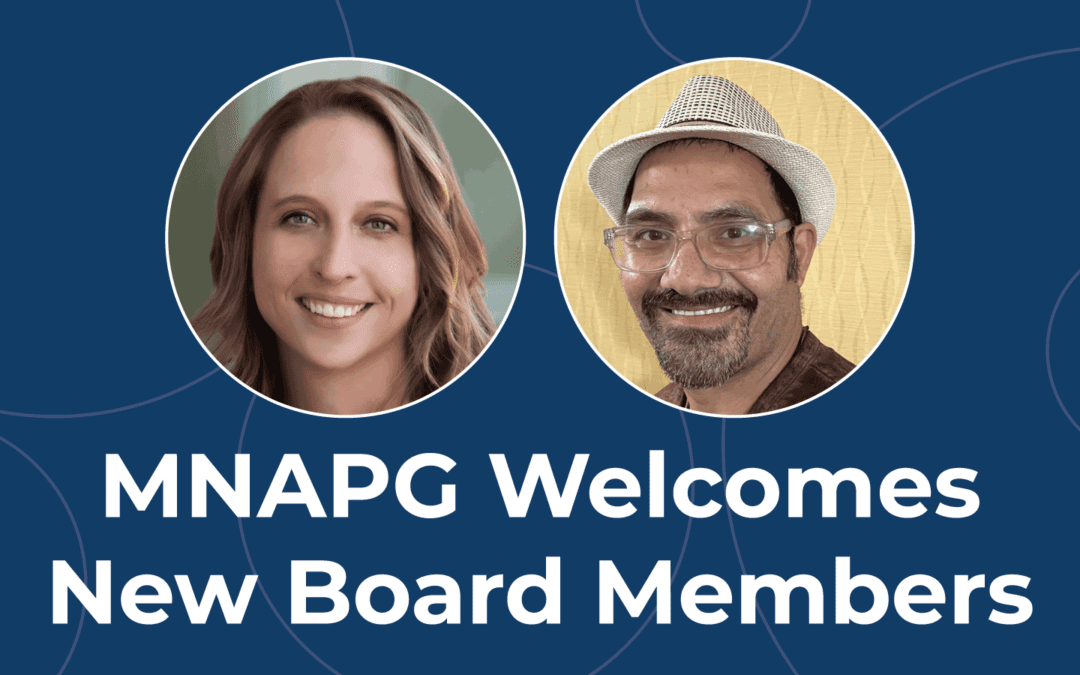
Nov 29, 2023 | ABOUT MNAPG
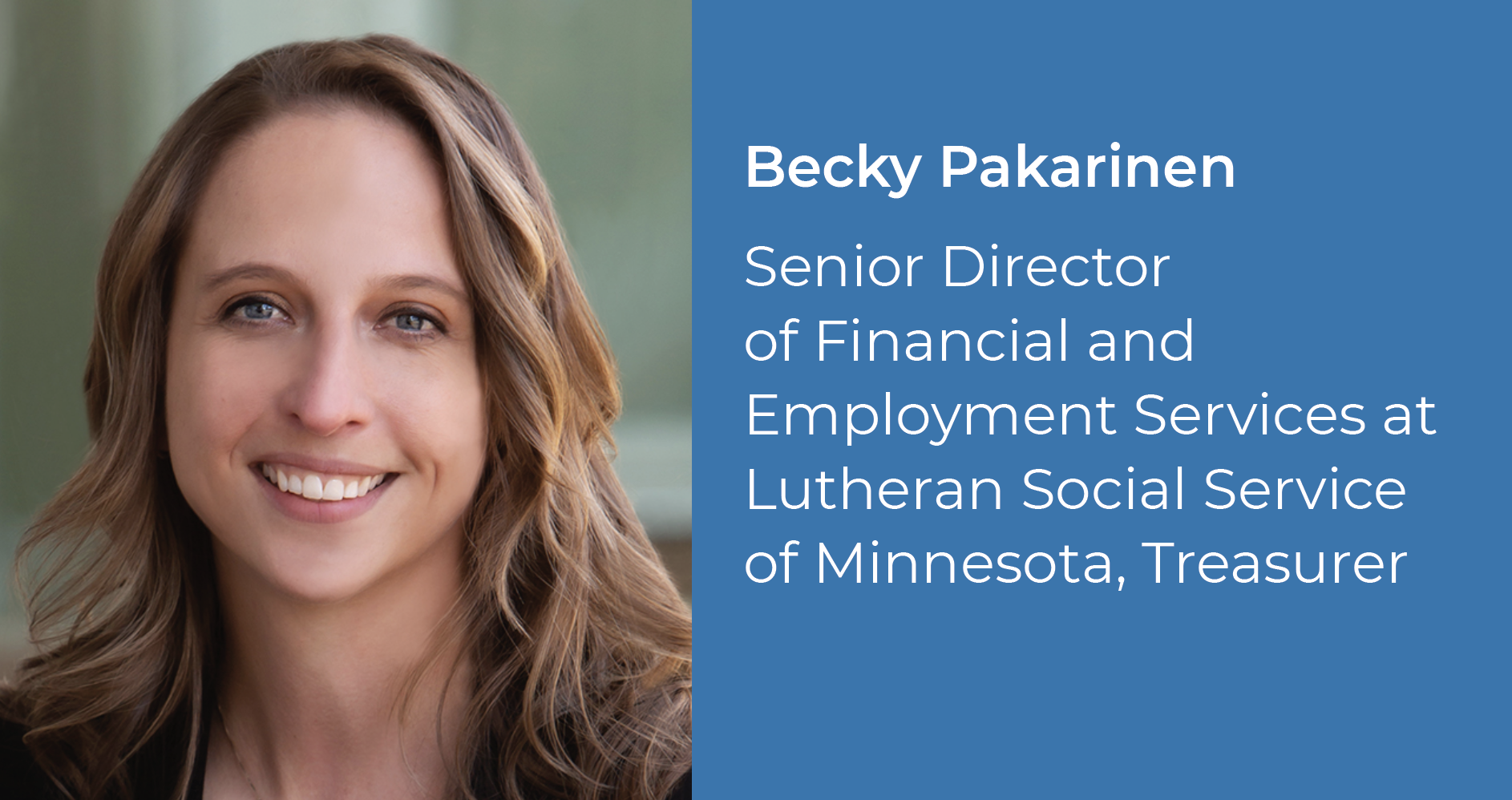
A: Before coming to work at Lutheran Social Service (LSS), I was an elementary school teacher, and along with teaching the kids you get to really know them and their families. There was a lot of addiction and financial struggles going on in the home, which then carried over into the classroom through their kids. It was hard to see these great families going through such tough times and not have a lot of knowledge or resources to help them. So, when I saw the opportunity to make a career change and become a financial counselor, it was a path that held a lot of interest for me. In my work as a financial counselor, I supported families directly, and then as a trainer and now senior director I bring in experts to ensure our counselors have the best knowledge and tools to help our clients achieve their financial goals.
Q: What do you hope you can contribute to the board and the mission?
A: Working at various levels in financial counseling has really allowed me to understand the struggles, whether large or small, that everyone has with their finances. It is important to me to normalize financial counseling so that folks reach out for help when they need it.
Q: Are there particular areas within problem gambling that are of special interest to you?
A: I am passionate about working to take the shame out of problem gambling. There are great services, tools and people out there who truly care and can help folks get back on track with their finances.
Q: What are some of your hobbies and interests?
A: I enjoy watching my kids play sports and spending time outdoors traveling, hiking and snowshoeing with family and friends.
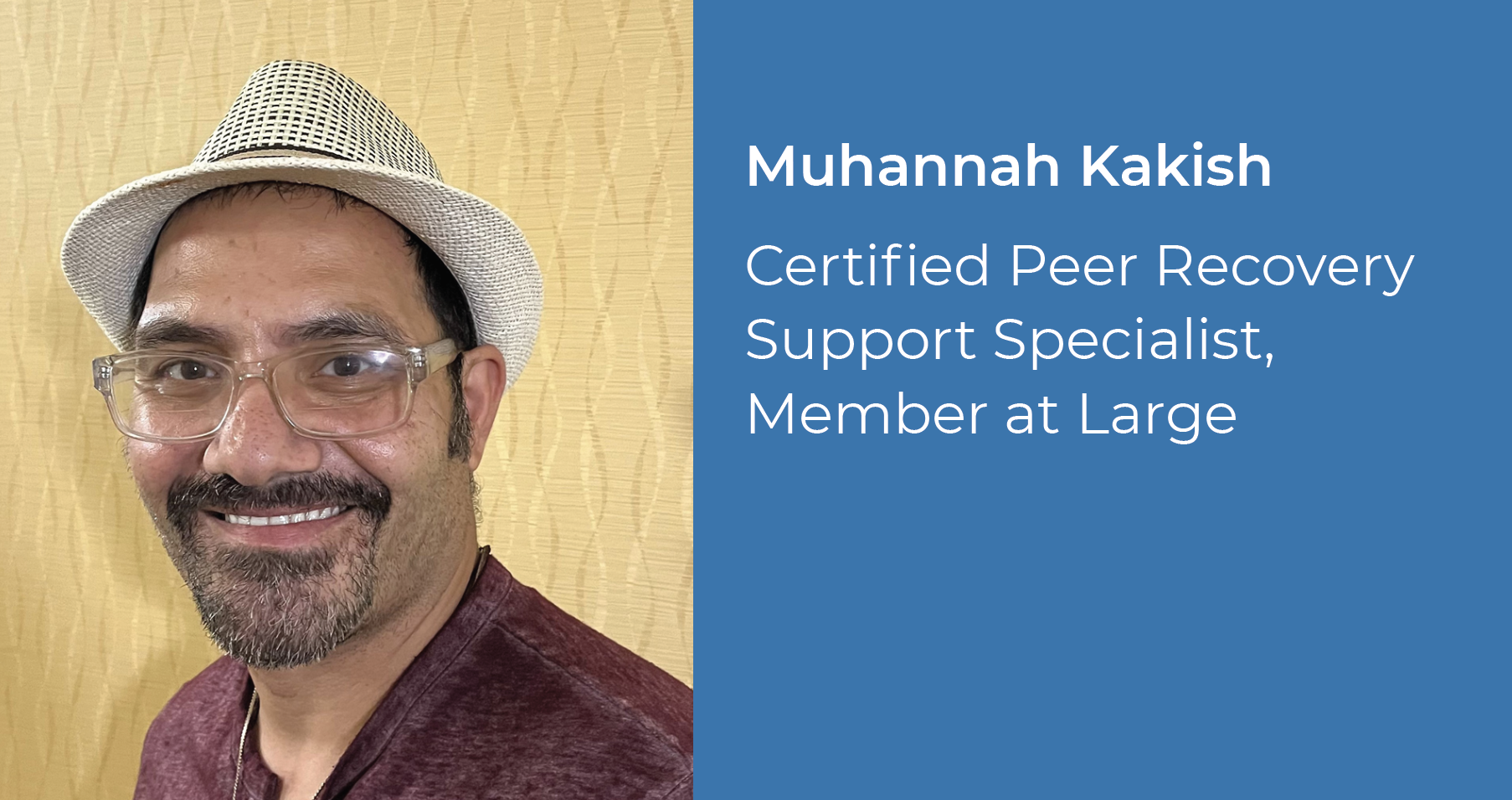
Q: Tell us a little bit about your background.
A: As a person in long-term recovery, I offer a unique perspective to the group. My understanding of recovery and specifically the continued sustainability of positive growth, is evidenced by my achievements in the field. I am a certified peer recovery support specialist, forensics peer recovery specialist, certified peer support specialist, as well as a certified wrap 1 facilitator. In addition to the titles I have earned, I've engaged in numerous other trainings and community endeavors. I am the host and creator of The Rise Up Hour, a weekly radio broadcast on WFNU 94.1 FM. The Rise Up Hour has given me the platform to reach the community by embracing all forms of recovery, celebrating allies to recovery, and espousing opportunities of involvement available. In addition to my focus on recovery, I am in the process of re-launching my eyecare business, EyEs Limited. I have taken every experience I've had, as well as everything I've learned from those experiences, to enhance my success to build the entity I've always envisioned.
Q: What do you hope you can contribute to the board and the mission?
A: Given my unique perspective, I hope to bring my lived-life perspective to the board. I want problem gambling to receive the recognition and inclusion, in terms of services available for recovery, that it demands. That includes the inclusion of problem gambling in the peer support recovery coach curriculum. I intend to offer my common sense, my background as a professional in a business context and the insight I've gained through my certifications and training. One of my biggest goals in serving on this board is to help remove the stigma of problem gambling and make getting help in dealing with the situation less taxing and more common.
Q: What are some of your hobbies and interests?
A: In my spare time, I am an avid volunteer in the community for a variety of causes, including The Steve Rummler HOPE Network, Minnesota Recovery Connection, the Peer Support Alliance and others. I also enjoy a variety of hobbies, including rock collecting, bird watching, gardening and playing with my two energetic dogs. I've recently embraced journaling and have begun to explore my artistic aspirations through sketching and painting.

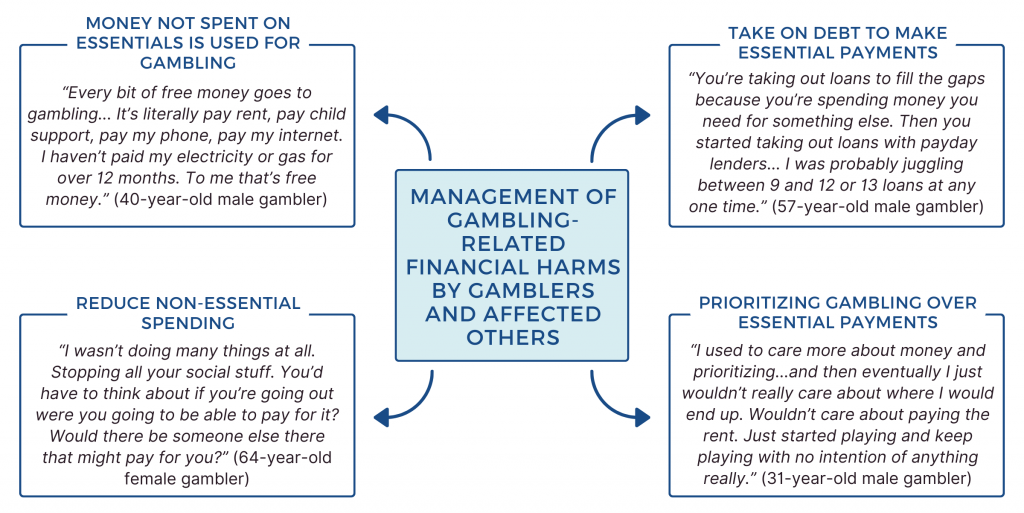 Figure. Quotations about the management of gambling-related financial harms among n =21 gamblers and affected others.
Why do these findings matter?
These findings demonstrate the complexity of gambling-related financial harms experienced by gamblers and affected others. Current messaging around the use of safer gambling strategies might contribute to the notion that gambling harm is something that can be managed by gambling ‘correctly’. It might also reinforce the stigma associated with gambling problems and debt. Public messaging about minimizing financial gambling harms should draw from lived experience and not focus solely on personal responsibility. For example, messaging could depict actual experiences of harm in people’s lives — a strategy used in other areas like tobacco control.
Every study has limitations. What are the limitations of this study?
Most participants were over the age of 40, so these findings might not be generalizable to other age groups. The study only included a small number of affected others, all of whom were women. Their experiences might vary depending on their relationship to the gambler; additional research is needed with a larger and more diverse sample of affected others.
Figure. Quotations about the management of gambling-related financial harms among n =21 gamblers and affected others.
Why do these findings matter?
These findings demonstrate the complexity of gambling-related financial harms experienced by gamblers and affected others. Current messaging around the use of safer gambling strategies might contribute to the notion that gambling harm is something that can be managed by gambling ‘correctly’. It might also reinforce the stigma associated with gambling problems and debt. Public messaging about minimizing financial gambling harms should draw from lived experience and not focus solely on personal responsibility. For example, messaging could depict actual experiences of harm in people’s lives — a strategy used in other areas like tobacco control.
Every study has limitations. What are the limitations of this study?
Most participants were over the age of 40, so these findings might not be generalizable to other age groups. The study only included a small number of affected others, all of whom were women. Their experiences might vary depending on their relationship to the gambler; additional research is needed with a larger and more diverse sample of affected others.

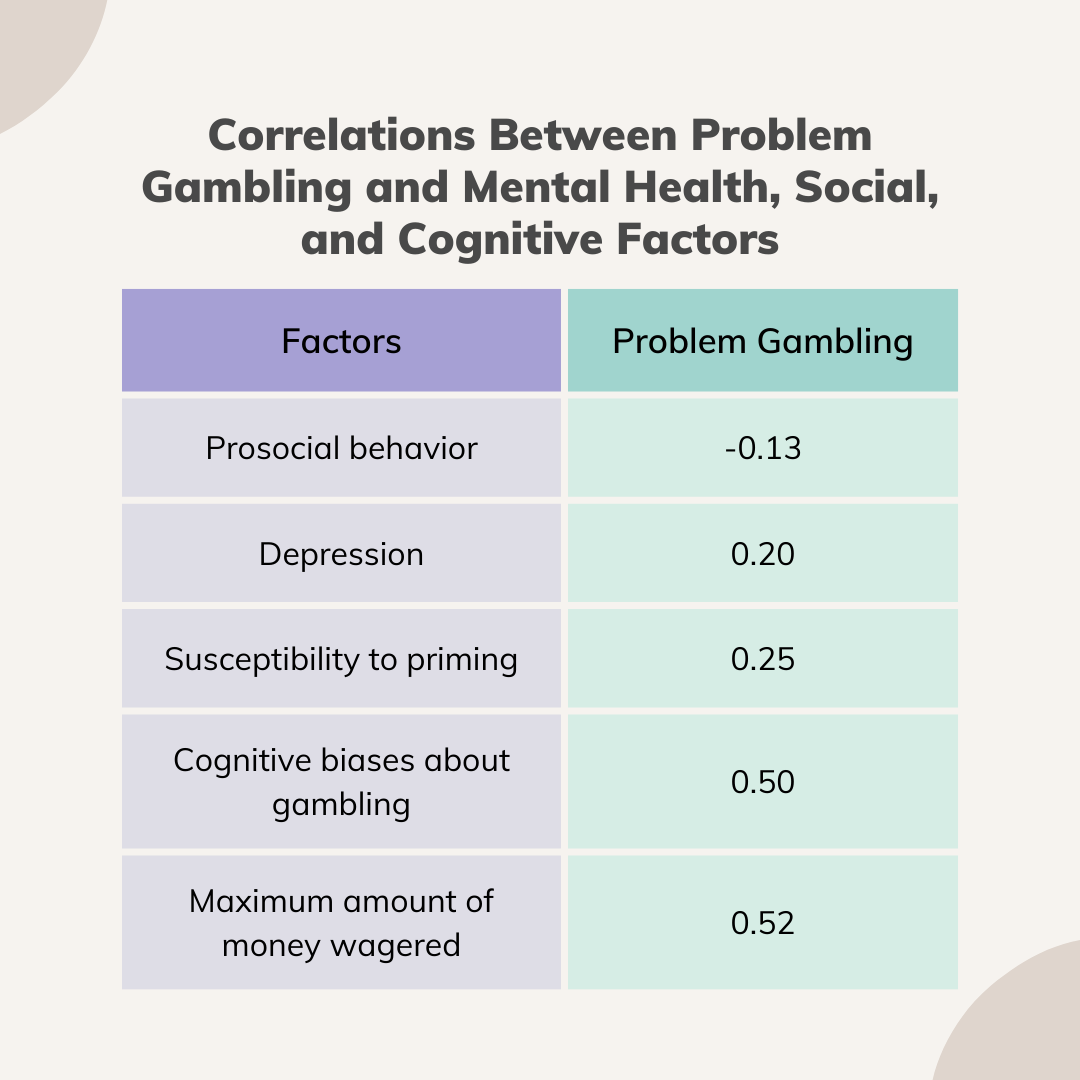 Figure. The correlation coefficients for problem gambling and several mental health, social, and cognitive factors. Correlations are ranked from smallest to largest. Values closer to 0 indicate a weaker relationship, while negative values closer to -1 indicate a stronger negative relationship and positive values closer to +1 indicate a stronger positive relationship. All correlations were statistically significant.
Why do these findings matter?
The findings add more evidence to the notion that people with Gambling Disorder may be at
Figure. The correlation coefficients for problem gambling and several mental health, social, and cognitive factors. Correlations are ranked from smallest to largest. Values closer to 0 indicate a weaker relationship, while negative values closer to -1 indicate a stronger negative relationship and positive values closer to +1 indicate a stronger positive relationship. All correlations were statistically significant.
Why do these findings matter?
The findings add more evidence to the notion that people with Gambling Disorder may be at