Mar 4, 2025 | PROBLEM GAMBLING, RECOVERY, STORIES
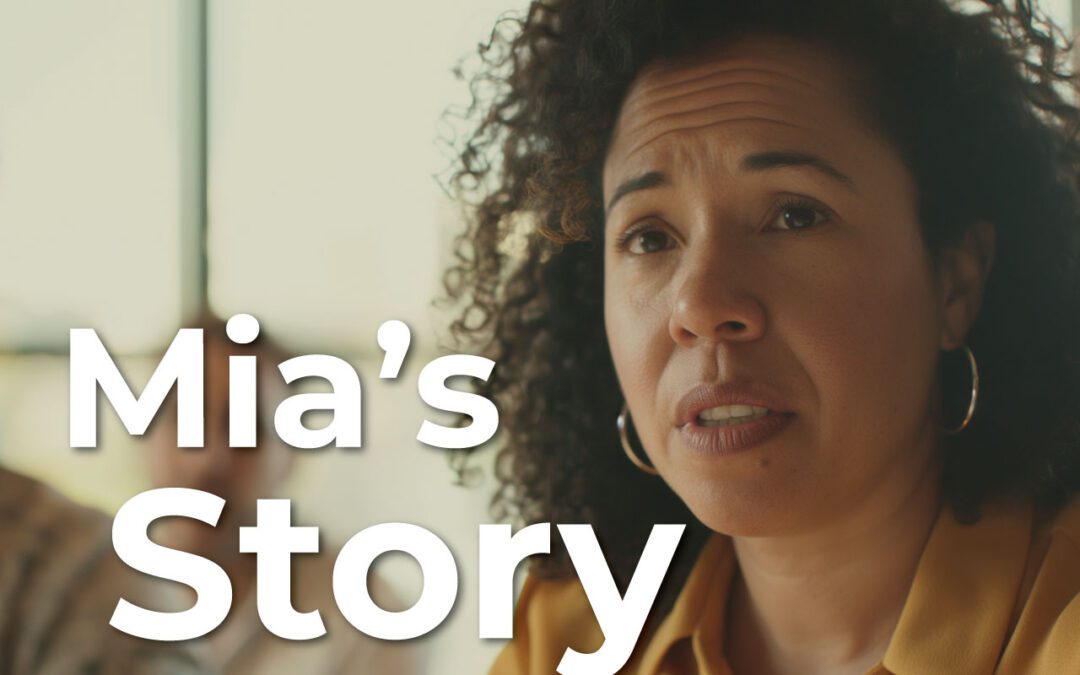
As I look back on the last several years, I can see times when my husband’s behavior was odd, when things didn’t seem quite right. At the time, however, I thought it was just him having a love for sports and it was his hobby.
But after I received a call from a detective in 2023 telling me about things that my husband had done, my world was turned upside down.
I have been with my husband for 14 years. I knew that he was into sports gambling since his college days but hadn’t thought much about it.
Three years ago, he had a significant win with one of the sports gambling accounts. I said, “Great! Let’s take this win and move on so it doesn’t become a problem” From that point on, I always tried to have conversations about the list of things we could do and which ones to prioritize. But he didn’t want to make concrete plans, always saying something like, “Yea, yea … we can talk about it later.”
About a year later, a friend of mine said she wanted to talk with me. She informed me that my husband had another big win, which he hadn’t told me about. My husband’s family also informed me that he’d borrowed money from them. This was the start of when things started to fall apart.
Trips to the mailbox became traumatic as late bill notices became common. Our power was shut off from not paying the electric bill. My husband’s mother started getting calls from debt collectors. I didn’t understand all of this, as I assumed we had all this money going back to his big win.
Several months after that, I received the call from the detective that changed my life. He told me my husband had committed some illegal acts over the last year. I was shocked. I could’ve never imagined my husband going to such extreme lengths such as stealing private information to obtain money.
The next half year was filled with uncertainty. While we waited to see what legal charges might be coming and the implications, my husband kept getting new jobs — and kept getting fired. Somehow, people kept finding out and news would spread to his new employers. We were in survival mode, not knowing what our future looked like.
During this time, my husband started going to Gamblers Anonymous meetings while I started attending Gam-Anon. Gam-Anon became my rock through all of the uncertainty. It’s taught me that you have to take one day at a time and that you can only control what you can control.
Charges finally came. My husband was convicted of six felony charges, including identify theft and business theft. He was sentenced to nine months in jail and five years’ probation. He ended up being eligible for electronic monitoring instead of jail time, still our lives have been forever changed.
Almost as bad as the charges were how we were treated at the hearings. My biggest fear was that everyone in our small community would find out. Many showed up at the hearings, and I remember how upsetting it was when someone laughed out loud when “gambling addiction” was mentioned.
The emotional impact of this has been immense. I was devastated and kept it to myself for almost five months, only telling a few people I could trust. I remember crying in the bathroom between the classes that I taught. It breaks my heart that my husband will never be able to practice in his field again.
While my trust in him has been very slow to come back, I’m optimistic about the future. I’m able to handle things better. I set boundaries, control finances and always know where my husband is.
For those reading this who have been affected by someone with a gambling problem, I would say this: When you’re in the thick of it and scared, know that things will eventually get better, and take advantage of the resources that are available, the best being sharing your story and hearing others stories. There is hope.

Mar 4, 2025 | ADVOCACY, PROBLEM GAMBLING
While about 30 Minnesota Senate and House hearings have focused on sports betting and other forms of gambling over the last few years, none have focused on the negative impacts of sports betting. Until now.
On January 8, the state legislature heard about the socioeconomic impacts of problem gambling and gambling addiction. Several speakers provided expert testimony from a variety of perspectives, including MNAPG executive director Susan Sheridan Tucker.
The hearing included the following speakers and perspectives:
Les Bernal, national director for Stop Predatory Gambling, spoke of concerns with proponents of expanded gambling trying to portray sports gambling companies as regular businesses when, in fact, he sees them as often using predatory practices to attract gamblers and encourage heavy gamblers to keep making bets. “It’s an adversarial relationship,” he said. “That’s true for all forms of commercialized gambling that is being done for profit.”
Matt Litt, a New Jersey-based attorney who specializes in litigation against sports books and gaming companies, spoke of the interactions he’s reviewed between gamblers and VIP hosts. He said that hosts send users trophies and offer all-expenses paid trips to users who spend a certain amount of money, enticing them to keep spending money.
Brett Hollenbeck, associate professor at the UCLA Anderson School of Management, highlighted the financial consequences of legalized sports gambling by presenting an analysis of credit scores, debt consolidation and collections data, bankruptcies and car loan delinquencies. He demonstrated that across nearly every metric, residents of states where sports betting was legal had worse outcomes than those in states that still prohibit sports gambling.
Similarly, Scott Baker, associate professor of Finance at Kellogg School of Management, and his colleagues found that people who bet on sports are more likely to overdraw their accounts, have higher credit card balances and invest less than those who do not gamble on sports.
Emily Arnesen, professor in the Economics department at the University of Oregon, and Kyutaro Matsuzawa, doctoral student in Economics at the University of Oregon, noted that the legalization of sports betting has increased certain types of intimate partner violence. They cited studies that have long documented that domestic violence increases when a local sports team loses. Arnesen and Matsuzawa estimated that sports betting legalization increased incidents of intimate partner violence by around 9%.
Susan Sheridan Tucker explained MNAPG’s neutral stance on gambling but emphasized its desire to advocate on behalf of those impacted by problem gambling, to ensure that appropriate consumer protections are incorporated into any legalization of gambling, and to secure adequate funding is set aside to advance prevention and treatment efforts.
Craig Johnson, a Minnesota certified gambling treatment provider with Club Recovery, spoke of the harms he has witness from his clients with gambling problems. “The effect of this disease on individuals is as profound as any addiction you can encounter,” he said.
In addition to the experts, several individuals with lived experience spoke of their personal struggles with gambling addiction and the impact it has had on their life and the lives of others.
The complete hearing can be viewed at https://www.youtube.com/watch?v=1RBsKS2BRTU.

Mar 4, 2025 | PROBLEM GAMBLING, RESEARCH
Artificial intelligence–commonly known as AI—is increasingly becoming a part of everyday life. We may think of its use in facial recognition apps, health care applications and even in a routine Google search, but what about its potential in problem gambling prevention and diagnosis?
Phil Sherwood, senior director of Responsible Gambling at PrizePicks, feels that AI can be a boon to responsible gambling programs and shared his perspective in a presentation to the MNAPG board in January.
What is AI?
AI is defined as the simulation of human intelligence in machines. It employs machine learning and language processing to automate tasks, enhance decision-making and boost efficiency.
Historic Use of AI
Gambling operators have been using AI for a long time to boost profits. It’s been used to improve marketing and to produce emotional appeals to specific customers, ultimately getting players to play more and more aggressively. AI has also been used to help gambling operators poach business from other operators.
Why use AI in Responsible Gambling Programs?
There are many reasons to employ AI in responsible gambling programs. Perhaps most importantly, AI can detect early signs of problem gambling, especially considering that more gambling and gaming is being done online. There is more data to access, such as time spent gambling, amount of money spent and other forms of gambling an individual might be involved in.
AI also enables personalized, real-time interventions. For example, if a player is exhibiting specific symptoms of problem gambling, the platform can send a personalized notification alerting them to risky behaviors or simply to make them more aware of their play. This notification might also suggest the responsible gambling tools that are available.
Another advantage of AI is that it reduces reliance on manual monitoring of a gambler’s behavior and allows for 24/7 oversight. With so many transactions available for analysis, a properly programmed AI system can identify potentially harmful behavior much better than humans.
AI-Driven Tools for Player Protection
AI can be used to protect players in several ways. It can identify risk behaviors such as loss-chasing and binge gambling. It can provide real-time alerts when it flags sudden changes that suggest immediate review. And it can also empower players gauge their own risk through gamified self-assessments in which they complete questionnaires. The gamified aspect may make players more receptive to the information that’s provided to them.
Interventional Levels Based on AI Insights
AI can suggest interventions commensurate with risk levels it assesses. For example, a system could address low-risk behaviors with basic pop-up reminders or session time limits. When a player exhibits moderate risk behavior, such as using different credit cards to gamble, the system can provide more tailored advice or impose or suggest temporary timeouts. When AI detects behaviors considered high-risk, it can instigate personalized care calls, exclusion options or even refer a customer to online behavioral counseling.
The U.S. is Behind in Use of AI
Phil noted that some operators, particularly those outside of the U.S. and those subject to regulations requiring the use of AI to monitor behavior, are incorporating AI to monitor player behavior and encourage player safety. However, he expressed concern that the U.S. is fearful of AI and that it’s use is discouraged, something he says would be an egregious mistake.
Challenges and Considerations in AI Implementation
While AI appears to hold considerable promise in protecting players from harm, there are challenges in its implementation. Some of those include privacy concerns (ensuring responsible use of player data), regulatory compliance (aligning AI tools with different jurisdictional standards) and the need for continuous improvement (models need regular updates based on evolving behaviors and research).
The Future of AI in Responsible Gaming and Problem Gambling
Looking ahead, Phil sees increased realization of the potential of AI with additional automation of support options for at-risk players, more predictive modeling for early intervention and standardization across operators for greater impact
“There will be so much innovation that comes from AI,” says Phil. “It’s evolved so much, even in the last year. I think the biggest things that will come from AI are things that we haven’t even thought of yet.”

Feb 3, 2025 | RESEARCH, YOUTH GAMBLING
By Nakita Sconsoni, MSW
Read the original article on the BASIS here.
Many adolescents may be exposed to gambling without realizing it. For example, youth who play video games may encounter chance-based mini-games that resemble actual gambling activities like roulette and blackjack, or they may purchase or be rewarded with mystery, in-game prizes, like loot boxes. These simulated gambling activities can lead to at-risk or problem gambling among adolescents. But how do we effectively safeguard young people from experiencing gambling harm? This week, The WAGER reviews a study by Lisa Lole and colleagues that identified adolescents’ views on how they can be better protected from gambling-related harm.
What was the research question?
According to adolescents, what strategies can be used to protect them from gambling-related harm?
What did the researchers do?
The researchers used recruitment agencies and online advertisements to obtain a sample of 89 adolescents aged 12-17 from Australia, and then surveyed them about gambling experiences via one-on-one interviews or an online discussion forum. Participants were screened for problem gambling using the DSM-IV-MR-J criteria and also answered open-ended questions about their gambling engagement. Participants then responded to questions about how adolescents could be protected from gambling harm (1) within their homes, (2) at school, (3) through advertisement/marketing practices, and (4) on a broader regulatory level. The researchers used the thematic analysis approach to analyze participants’ responses.
What did they find?
The most widely-recognized theme among participants was the desire for honesty about how gambling — and its associated harms — is communicated to them and represented in the media. Participants felt that rather than simply prohibiting gambling activities, parents can protect their children from gambling harm by including them in conversations about gambling and educating them about risks and responsible gambling practices (see Figure). Similarly, they felt that schools should use lived experience narratives to educate students about the addictive nature of gambling and the reality of gambling odds. On a broader scale, participants noted that gambling advertisements can be overly positive and misleading, and should not be broadcast on mediums that are frequently used by adolescents such as gaming and social media platforms. Instead, marketing campaigns should provide a more realistic understanding of gambling, including potentially negative outcomes, how to resist the temptation to gamble, and where to access help. Lastly, participants argued for gambling regulation reform, particularly within simulated gambling activities. They advocated for limits on in-game gambling features and in-game spending, as well as stricter age limits.
 Figure. Direct quotes from participants on how to prevent gambling harm among adolescents, separated into four categories: (1) strategies that can be implemented with parents/guardians, (2) within the school system, (3) through advertising/marketing practices, and (4) through gambling regulations. Click image to enlarge.
Why do these findings matter?
These findings suggest that adolescents recognize the need for a collective response to gambling prevention and education, with special considerations for young people. This public health effort needs to go beyond any approach that places the burden solely on the individual gambler to “gamble responsibility.” Instead, it should be the responsibility of various stakeholders to protect today’s youth from gambling-related harm, including parents/guardians, the school system (e.g., teachers and counselors), and gambling operators/regulators.
Every study has limitations. What are the limitations of this study?
The researchers did not use representative sampling, the sample size was relatively small, and all participants were from Australia. So, the findings might not be generalizable to adolescents from other areas. This study also relied on self-reported data, which could be subject to recall or social desirability bias.
For more information:
Do you think that you or someone you know might have a gambling problem? Visit the National Council on Problem Gambling for screening tools and resources. For additional resources, including gambling and self-help tools, visit our Addiction Resources page.
— Nakita Sconsoni, MSW
Figure. Direct quotes from participants on how to prevent gambling harm among adolescents, separated into four categories: (1) strategies that can be implemented with parents/guardians, (2) within the school system, (3) through advertising/marketing practices, and (4) through gambling regulations. Click image to enlarge.
Why do these findings matter?
These findings suggest that adolescents recognize the need for a collective response to gambling prevention and education, with special considerations for young people. This public health effort needs to go beyond any approach that places the burden solely on the individual gambler to “gamble responsibility.” Instead, it should be the responsibility of various stakeholders to protect today’s youth from gambling-related harm, including parents/guardians, the school system (e.g., teachers and counselors), and gambling operators/regulators.
Every study has limitations. What are the limitations of this study?
The researchers did not use representative sampling, the sample size was relatively small, and all participants were from Australia. So, the findings might not be generalizable to adolescents from other areas. This study also relied on self-reported data, which could be subject to recall or social desirability bias.
For more information:
Do you think that you or someone you know might have a gambling problem? Visit the National Council on Problem Gambling for screening tools and resources. For additional resources, including gambling and self-help tools, visit our Addiction Resources page.
— Nakita Sconsoni, MSW

 Figure. Selected suggested improvements to VSE programs, from representatives from various gambling-related sectors in seven jurisdictions (n = 102). Bulleted items are broad suggestions from participants and quotes are direct comments from participants pertaining to the suggested improvement. Click image to enlarge.
Why do these findings matter?
These findings suggest that, to increase the utilization of VSE and reduce gambling-related harms, changes are needed to improve current VSE programs. Changes that facilitate the exclusion process, such as making it easier, more accessible, and more flexible, might increase utilization of these programs. It is common for gamblers who have self-excluded to breach VSE, in part because VSE regulations are often specific to only one venue type (e.g., casinos) and don’t extend to unauthorized online gambling operators. Stricter enforcement of VSE is needed to prevent breaches. This approach might include state/national, or even global, comprehensive registers. Such registers should include all gambling venues and locations, and additional measures could be taken to block unlicensed operators. Finally, gamblers should have access to a wide array of treatment and support services in addition to VSE (e.g., financial counseling).
Every study has limitations. What are the limitations of this study?
Participants were not evenly distributed across gambling-related sectors, and some jurisdictions were missing respondents from one or more sectors. These 102 individuals were not a representative sample, and the findings might not generalize to the various gambling-related sectors and jurisdictions as a whole.
Figure. Selected suggested improvements to VSE programs, from representatives from various gambling-related sectors in seven jurisdictions (n = 102). Bulleted items are broad suggestions from participants and quotes are direct comments from participants pertaining to the suggested improvement. Click image to enlarge.
Why do these findings matter?
These findings suggest that, to increase the utilization of VSE and reduce gambling-related harms, changes are needed to improve current VSE programs. Changes that facilitate the exclusion process, such as making it easier, more accessible, and more flexible, might increase utilization of these programs. It is common for gamblers who have self-excluded to breach VSE, in part because VSE regulations are often specific to only one venue type (e.g., casinos) and don’t extend to unauthorized online gambling operators. Stricter enforcement of VSE is needed to prevent breaches. This approach might include state/national, or even global, comprehensive registers. Such registers should include all gambling venues and locations, and additional measures could be taken to block unlicensed operators. Finally, gamblers should have access to a wide array of treatment and support services in addition to VSE (e.g., financial counseling).
Every study has limitations. What are the limitations of this study?
Participants were not evenly distributed across gambling-related sectors, and some jurisdictions were missing respondents from one or more sectors. These 102 individuals were not a representative sample, and the findings might not generalize to the various gambling-related sectors and jurisdictions as a whole.