Aug 7, 2023 | ABOUT MNAPG
The Minnesota Alliance on Problem Gambling (MNAPG) received two national awards at the recent conference of the National Council on Problem Gambling. MNAPG received awards for the best affiliate newsletter and the best affiliate website.
“We have devoted considerable time and resources into both of these important communication tools, so we’re thrilled to see our work recognized at a national level,” says Susan Sheridan Tucker, MNAPG executive director. “I am grateful to my team for their contributions in making these useful resources.”
The 2023 Affiliate Website Award from the National Council on Problem Gambling recognizes an outstanding website that has increased awareness of problem gambling.
MNAPG’s new website is the culmination of in-depth planning into MNAPG’s various audiences. MNAPG strives to be the central hub for all things Minnesota problem gambling-related, offering access to treatment information, research findings, recovery stories and podcasts.
The 2023 Affiliate Newsletter Award from the National Council on Problem Gambling recognizes an outstanding problem gambling-related newsletter.
Northern Light, MNAPG’s quarterly newsletter, has earned several national awards since it was created in 2010. The newsletter seeks to educate visitors and readers about the latest trends in problem gambling, treatment and prevention, as well as provide updates on the organization’s outreach efforts and highlight stories of hope in recovery.

Jun 27, 2023 | RESEARCH, SPORTS BETTING
Read the original article on The Basis HERE.
By John Slabczynski.
Video games have drawn the attention of activists and public health advocates since as early as the 1970’s. Many of these activists have focused on the intense depictions of violence in video games and suggest that these depictions may lead to real-life violence. One area that is often neglected, however, are depictions of substance use and gambling in video games. Although regulators have begun to investigate loot boxes and their relationship with problem gambling, other forms of gambling in video games have received less attention. For example, skin betting (i.e., exchanging virtual goods for digital gambling currency) — which was first popularized by the game Counter-Strike: Global Offensive — has evolved from betting on in-game matches to skins being used as currency in other games of chance such as roulette. Many of those involved in these underground gambling networks are adolescents who are unable to engage in traditional gambling. This week, the WAGER reviews a study by Nancy Greer and colleagues that examined links between esports, skin betting, and problem gambling.
What was the research question?
How does esports and skin betting relate to other forms of gambling and gambling harms?
What did the researchers do?
The researchers recruited participants through Amazon Mechanical Turk and social media posts in online gaming communities to participate in an online survey. All participants reported either esports cash or skin betting, or gambling skins on games of chance in the past 6 months. In total, 737 participants completed the survey. The survey itself focused on four broad categories: (1) video game involvement, (2) video game-related gambling (including betting on esports), (3) traditional gambling, and (4) problem gambling and gambling-related harms. The researchers used ordinal logistic regression to test the hypothesis that video game involvement increases the likelihood of engaging in video game-related gambling, which in turn increases the likelihood of engaging in traditional gambling and experiencing gambling harms.
What did they find?
Though video game involvement related to video game-related gambling, video game-related gambling was only slightly related to traditional gambling. Consider three different video game-related types of gambling: esports cash betting, esports skin betting, and skin betting on other games of chance. Of these, only esports cash betting frequency significantly predicted involvement in traditional gambling activities. Interestingly, although the sample overall reported high rates of problem gambling and gambling harms, neither esports cash betting nor esports skin betting significantly predicted problem gambling or gambling harms. When controlling for other forms of traditional gambling, only skin gambling on games of chance was predictive of problem gambling and gambling harms (see Figure).
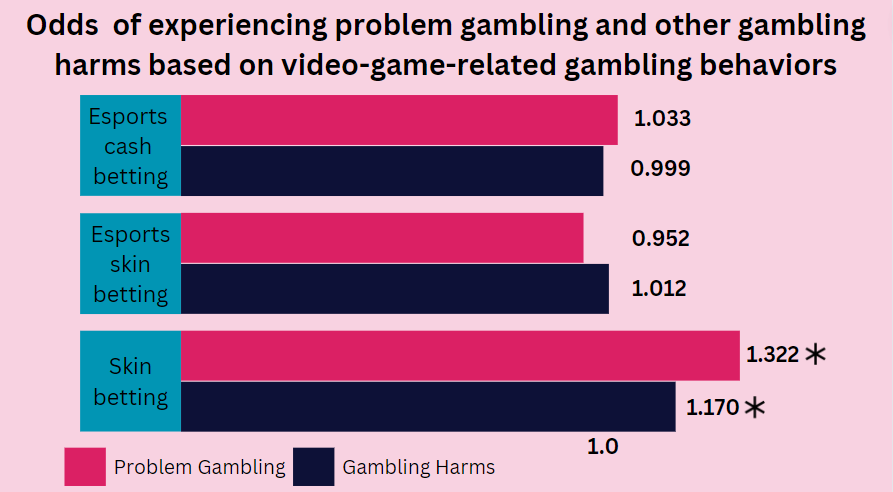 Figure. This figure displays the odds of experiencing problem gambling and gambling harms based on video game-related gambling behaviors. Odds ratios above 1.00 indicate that for every one unit increase in the predictor variable (video game-related gambling behaviors) the odds of being one category higher in the outcome variable (problem gambling or gambling harms) increases by X times. An odds ratio below 1.00 indicates that the odds decrease by X times. For example, a one unit increase in esports cash betting frequency would mean a participant is 1.033 times as likely to experience a one unit increase in their problem gambling severity. Only skin betting on games of chance was significantly associated with either outcome variable.
Why do these findings matter?
These findings suggest that buying skins and esports gambling are not risk factors for problem gambling in and of themselves. Rather, skin gambling on games of chance appears to increase the risk of gambling harms. It remains unclear whether individuals who gamble skins on games of chance do so because they have exhausted other financial resources, or if skin gambling on games of chance directly increases the risk of problem gambling and other gambling harms. Regardless, these findings suggest that regulatory bodies should consider focusing on gambling operators who facilitate skin gambling on games of chance, rather than other more traditional esports focused operators.
Every study has limitations. What are the limitations in this study?
This study has significant limitations in terms of its generalizability. Participants were required to have gambled either on esports or via using skins in the past six months, so the results likely do not represent video game players as a whole. The study also failed to include anyone under the age of 18 despite the fact that many people who gamble using skins are adolescents. Additionally, due to the study’s limited sample size, the researchers were unable to conduct path analysis, an analytical technique that allows for estimating causal effects instead of only statistical associations.
For more information:
Individuals who are concerned about their gambling behaviors or simply want to know more about problem gambling may benefit from visiting the National Council on Problem Gambling. Others who want to learn more about video game addiction can find information via the Cleveland Clinic. Additional resources can be found at the BASIS Addiction Resources page.
Figure. This figure displays the odds of experiencing problem gambling and gambling harms based on video game-related gambling behaviors. Odds ratios above 1.00 indicate that for every one unit increase in the predictor variable (video game-related gambling behaviors) the odds of being one category higher in the outcome variable (problem gambling or gambling harms) increases by X times. An odds ratio below 1.00 indicates that the odds decrease by X times. For example, a one unit increase in esports cash betting frequency would mean a participant is 1.033 times as likely to experience a one unit increase in their problem gambling severity. Only skin betting on games of chance was significantly associated with either outcome variable.
Why do these findings matter?
These findings suggest that buying skins and esports gambling are not risk factors for problem gambling in and of themselves. Rather, skin gambling on games of chance appears to increase the risk of gambling harms. It remains unclear whether individuals who gamble skins on games of chance do so because they have exhausted other financial resources, or if skin gambling on games of chance directly increases the risk of problem gambling and other gambling harms. Regardless, these findings suggest that regulatory bodies should consider focusing on gambling operators who facilitate skin gambling on games of chance, rather than other more traditional esports focused operators.
Every study has limitations. What are the limitations in this study?
This study has significant limitations in terms of its generalizability. Participants were required to have gambled either on esports or via using skins in the past six months, so the results likely do not represent video game players as a whole. The study also failed to include anyone under the age of 18 despite the fact that many people who gamble using skins are adolescents. Additionally, due to the study’s limited sample size, the researchers were unable to conduct path analysis, an analytical technique that allows for estimating causal effects instead of only statistical associations.
For more information:
Individuals who are concerned about their gambling behaviors or simply want to know more about problem gambling may benefit from visiting the National Council on Problem Gambling. Others who want to learn more about video game addiction can find information via the Cleveland Clinic. Additional resources can be found at the BASIS Addiction Resources page.
May 12, 2023 | PROBLEM GAMBLING
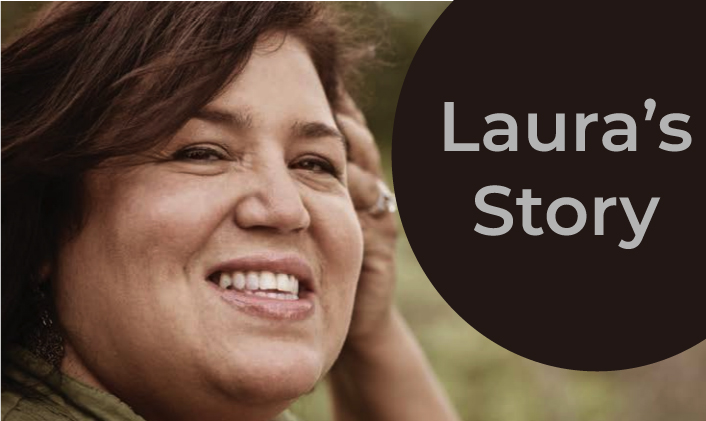
The first time I gambled, when I was 18, I considered it simply entertainment. I might spend $20-$40 and go with some friends. It never occurred to me that gambling could become a debilitating addiction.
However, while I was in college, the impact of several events unsettled me. First, my mother’s longtime partner left her, leaving emotional wounds for all of us to deal with. And not long after that, I learned that a young girl who I had mentored died by suicide. I tried to focus and managed to graduate, but I never had a chance to truly grieve these losses while in school.
After graduating, I eventually moved back to Minnesota in 2017 and got engaged. That’s when I started to explore gambling. By the time I got married in July of 2018, I was living a double life with gambling. I remember telling my husband at the time that I felt more married to slot machines than to him.
I had been looking forward to marriage and the opportunity to be part of his family, as I was adopted and longed to be loved and experience a sense of belonging. Unfortunately, although I initially felt accepted by my husband’s family in the beginning, I eventually found it hard to be myself.
All of these struggles — rejection, abandonment, not feeling I belonged or was loved — drove me to gamble as an escape. Gambling offered a “fake happy place” for me to numb my pain and just be. I felt emotions on the outside but had deep pain inside myself. When I gambled, it felt fun, but as time progressed, I was exhausted. I felt like a robot with an altered mind and body
At first, I gambled for just a few hours. But before long, I was gambling for longer periods of time, spending $300-$500 two to three times a month. Things progressed quickly. Within a year, I was losing $1,000- $2,000 two to three times a week.
I would drive to Mystic Lake no matter what the weather was like. As I drove, I’d constantly hear a voice telling me that everything would be fine — but it was hard to numb that voice.
My gambling escalated even more. I spent a lot of my inheritance from my grandparents, approximately half a million dollars in two years
My health started going downhill. I stopped taking important medications and stopped eating, losing 30 pounds over two years. I let go and didn’t care, as if I wanted to die that way.
Well into my addiction my morals became very foggy and distorted. My socializing with friends became more isolating. I lied, I stole from my fiancé, used my inheritance and other forms of getting money (annuities, life insurance), and sold my most prized possessions. In the end, the last things I sold were my flute from childhood and a camera my grandma had bought me. I was desperate and needed money, it was my fix.
I lost my job in December 2019 and had a mental breakdown on January 2, 2020. I knew I wanted to get help and be in a safe place. My mom grabbed my childhood blanket and bear to help comfort me. I told her to take me to the ER. I had suicidal thoughts. I was done living.
I told my mother all about my gambling. She said my eyes were a different color during my breakdown and wanted to protect me from the kitchen knives. Eventually, she got me to a safe place, the hospital. I ended up celebrating my 33rd birthday in the hospital, and my mom, aunt and husband came to celebrate. I never thought I’d be where I was, but I needed to feel safe and heard in a protected environment.
It was during my hospital stay that we found a program for inpatient care for gambling addiction, the Vanguard Center at Project Turnabout in Granite Falls. I went there shortly after leaving the hospital. It was the hardest thing I’ve ever done in my life.
As we drove, I noticed an eagle flying next to the car. For me, it was a symbol of a higher power. I know that a “higher power” can push some people away, but for me it’s about nature
At Vanguard, I learned a lot about addiction in general but also gambling addiction. I related to the 20 questions in the GA yellow combo book and, more and more, realized I did have a gambling problem.
Being in treatment for five weeks, I learned that gambling addiction doesn’t define me, even if it happened in my life. I learned more about how much more pain I had endured in life and its impact on my self-esteem and self-confidence. In treatment, I have a relapse prevention plan, and support has helped me continue to make my recovery number one. I learned how to advocate for myself and what I need, knowing my toolbox of coping skills when things get overwhelming and learning to be kind and gentle to my new self. Recovery is challenging but I tell myself I do the best I can do in that day and give myself credit. It’s truly okay to ask for help. I’m not alone anymore.
Sharing my story is part of the healing I do every day, part of my recovery. I hope that sharing my story can help others and be a reminder that there is help out there.

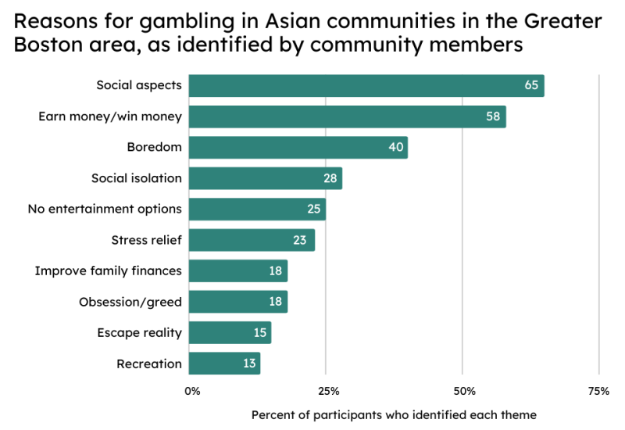 Figure. Reasons for gambling in Asian communities in the Greater Boston area, by percentage of respondents who identified each reason for gambling (n = 40).
Why do these findings matter?
These findings illustrate the complex and systemic issues that contribute to gambling in Asian communities in the United States, including social and cultural isolation due to challenges integrating into American society, and struggles working low-wage and stressful jobs. Asian CARES (Center for Addressing Research, Education, and Services) of Boston created actionable recommendations for change based on these findings. They recommend investing in neighborhoods where Asian immigrants live and work to create inclusive spaces that facilitate social and recreational activities other than gambling. Additionally, Asian CARES recommended increasing funding to trusted community-based organizations (e.g., Boston Chinatown Neighborhood Center) that provide culturally and linguistically responsive problem gambling, mental health, and social services (e.g., services that help individuals find and maintain employment).
Every study has limitations. What are the limitations of this study?
Data were self-reported and based on past experiences, so the results might be subject to recall bias. Findings from this study might not be generalizable to other geographic areas or to other immigrant populations.
For more information:
Do you think you or someone you know has a gambling problem? Visit the National Council on Problem Gambling for screening tools and resources. For individuals in Massachusetts looking for culturally and linguistically relevant problem gambling services, call the Massachusetts Problem Gambling Helpline (800-327-5050) or visit the Boston Chinatown Neighborhood Center website.
1. Interviews were conducted with members of the Khmer, Chinese, Korean, and Vietnamese immigrant communities in the Greater Boston area.
Figure. Reasons for gambling in Asian communities in the Greater Boston area, by percentage of respondents who identified each reason for gambling (n = 40).
Why do these findings matter?
These findings illustrate the complex and systemic issues that contribute to gambling in Asian communities in the United States, including social and cultural isolation due to challenges integrating into American society, and struggles working low-wage and stressful jobs. Asian CARES (Center for Addressing Research, Education, and Services) of Boston created actionable recommendations for change based on these findings. They recommend investing in neighborhoods where Asian immigrants live and work to create inclusive spaces that facilitate social and recreational activities other than gambling. Additionally, Asian CARES recommended increasing funding to trusted community-based organizations (e.g., Boston Chinatown Neighborhood Center) that provide culturally and linguistically responsive problem gambling, mental health, and social services (e.g., services that help individuals find and maintain employment).
Every study has limitations. What are the limitations of this study?
Data were self-reported and based on past experiences, so the results might be subject to recall bias. Findings from this study might not be generalizable to other geographic areas or to other immigrant populations.
For more information:
Do you think you or someone you know has a gambling problem? Visit the National Council on Problem Gambling for screening tools and resources. For individuals in Massachusetts looking for culturally and linguistically relevant problem gambling services, call the Massachusetts Problem Gambling Helpline (800-327-5050) or visit the Boston Chinatown Neighborhood Center website.
1. Interviews were conducted with members of the Khmer, Chinese, Korean, and Vietnamese immigrant communities in the Greater Boston area.