Aug 7, 2024 | ABOUT MNAPG, ADVOCACY
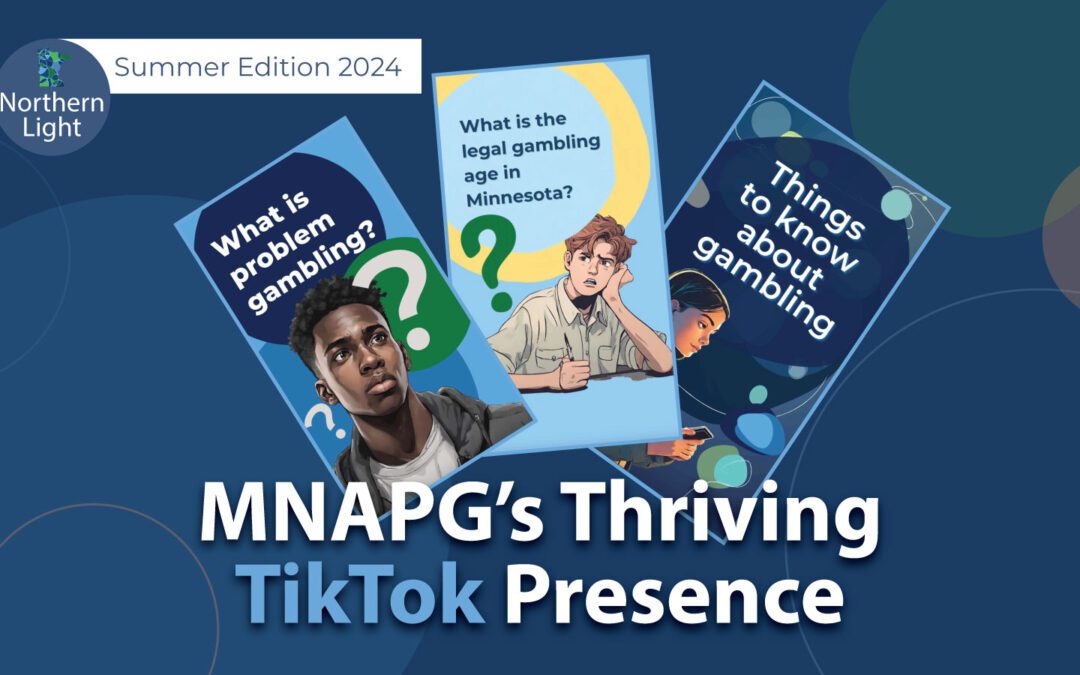
MNAPG added TikTok to the ranks of its social media channels last fall. Northern Light sat down with Rhiana Stark of Evans-Stark Design, to learn more about this effort.
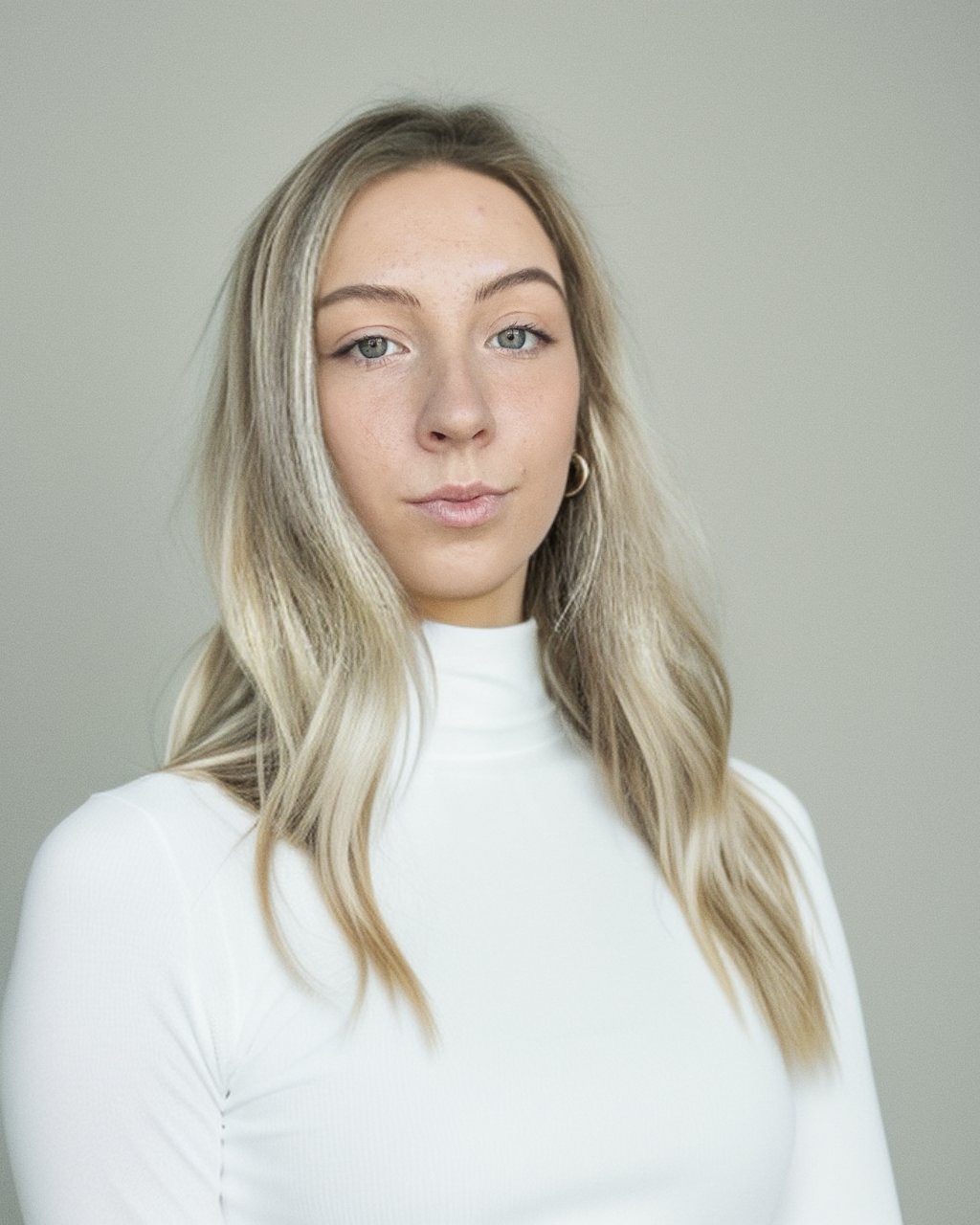
Rhiana Stark, Marketing Specialist
NL: When did MNAPG gain its presence on TikTok?
RS: Our TikTok was established in September of 2023. Our first video was an introduction to who MNAPG is and what we do.
NL: How many followers do we have to date?
RS: We have 1,783 followers as of July 1, 2024, and we have made 31 posts as of that date.
NL: What are the primary goals for our TikTok strategy?
RS: There are two primary goals: raising awareness about problem gambling to a young demographic and providing resources for users looking for help.
Raising awareness includes educating younger people about what problem gambling is and what it looks like, how problem gambling is similar to addictions they are more likely to take seriously and have indirect or direct experience with, such as alcohol and drug addiction, and the danger of activities that don’t present as gambling but introduce and encourage gambling behavior, such as lottery tickets and loot boxes. We published MNAPG’s PSA on TikTok that emphasizes the similarity between gambling addiction and other addictions. (See https://www.tiktok.com/@mnapg/video/7303622776265461023.)
As far as providing resources for users that are looking for help, our TikTok content promotes the comparative tool survey [an individual’s betting behavior is compared against the behavior of other Minnesotans], the Minnesota problem gambling helpline, Gamban and BetBlocker, along with mental health-focused meditations and “scrolling breaks.”
NL: What are the demographics we hope to reach with TikTok?
RS: TikTok is a wonderful platform to reach an audience that, prior to our involvement on TikTok, was a little out of reach. The average age of TikTok users is 16–24, which is the general range we hope to reach with our content.
NL: What types of content have you found to be most effective for engaging our audience on TikTok?
RS: Users respond well to new information and TikTok has become a treasure trove for people around the world to learn new things without doing an extensive amount of their own research. When we publish educational content about gambling or gaming we get a lot of “saves,” which means people are bookmarking the video to return to it later or saving it to their phone. We also get a lot of positive engagement with our meditation videos. The dependence that people in my [younger] generation have on their phones is not lost on me. In some ways, I think people are waiting for something like our meditation videos to come up as they scroll to remove them from their content consumption, and I see that in the comments and quality of engagement on those particular videos.
NL: Can you share a particular success story or a campaign that performed exceptionally well on TikTok?
RS: I wish I had a definite and simple answer to this but in reality, most of our campaigns do very well across the board. What I will say is that users on TikTok, especially the younger audience we speak to, are not usually looking for our content. We come up on their feed when they are probably trying to detach and zone out, and we are talking about things that may be difficult, boring or threatening to their way of life. Kids usually don’t want to be told to act with caution, think twice before taking actions online or limit the amount of time they spend doing something that brings them instant gratification. And they let us know in the comments. So, I don’t look at those things to measure our success or impact. I try to read between the lines. I scroll through the resistant-natured comments and once in a while, I'll find a user that just says “thank you” or if we’re really lucky they’re asking how to get help. So even though we don’t have users overloading our analytics with positive replies, we are a present, consistent, neutral and reliable source of education and resources for those who need help, whenever they’re ready – I think that makes our efforts successful.
NL: What are some of the ways we assess our performance on TikTok?
RS: We measure engagement metrics similar to the way we monitor our other social platforms. This includes how long users are watching our videos, how many likes we’re getting, saves, reposts, shares, etc. We garner an average of 123,000 views per video that we post and promote.
NL: What strategies do we use to grow our follower base on TikTok?
RS: We are still building our community on TikTok, which we try to accomplish alongside our goals of spreading education, awareness and available resources. Our videos are intentionally created to capture the user’s imagination. On a platform where we are competing for views against creators that offer an almost unlimited pool of entertainment, it’s important to create videos that are visually appealing as well as educational and helpful. This is why so many of our videos are animated with graphics that mimic our brand identity and play an engaging sound to accompany the visual components.
May 23, 2024 | ABOUT MNAPG, PROBLEM GAMBLING, PROFESSIONALS, RESOURCES
Minnesota Conference
The Minnesota Conference on Problem Gambling takes place on Thursday, Sept. 19 at the Hilton Minneapolis/Bloomington. While we’re still finalizing the day’s sessions, here are some topics we plan to cover:
- The intersection of gambling and suicide
- Financial counseling for families
- The impact of gambling on families
- Community leader panel discussion about gambling
- Update on sports betting legislation
- National gambling attitudes survey results
Please check mnapg.org in the coming months for additional information about the conference as we solidify the agenda.
National Conference
The National Conference on Gambling Addiction & Responsible Gambling takes place in San Diego on July 17-19. The conference brings together world-class presenters to deliver powerful and insightful messages about problem gambling and responsible gambling. For more information and to register, visit ncpgconference.org.
May 23, 2024 | ABOUT MNAPG, ADVOCACY, YOUTH GAMBLING
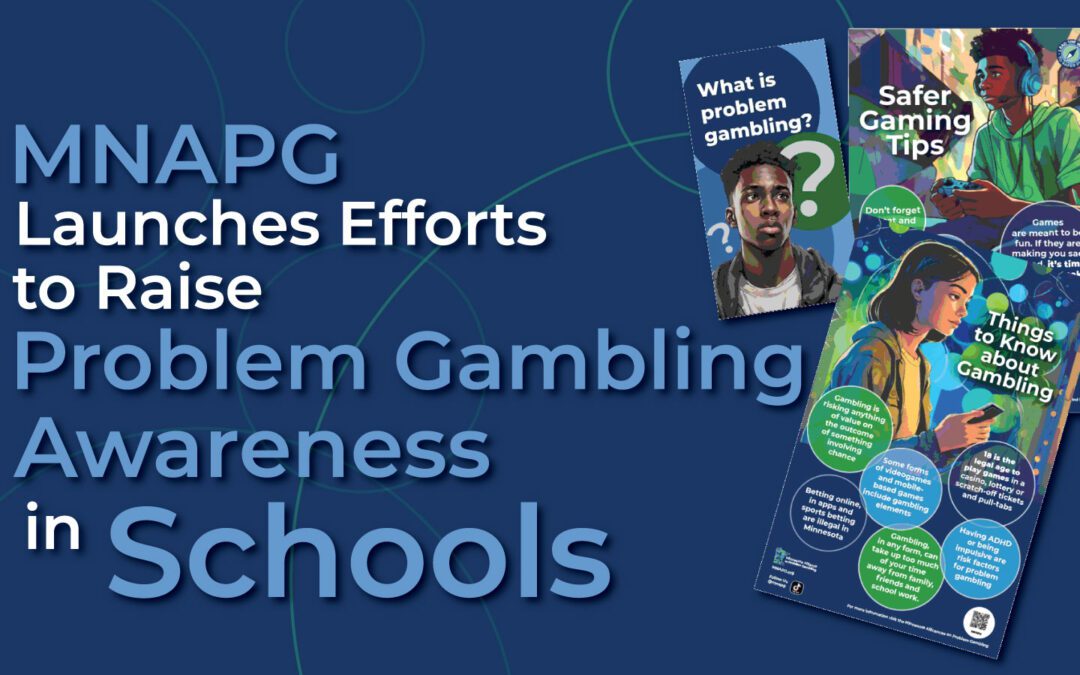
In today's digital age, the allure of online gaming and gambling platforms can be enticing, often leading to harmful consequences for our youth. To help build awareness of these risks, MNAPG has created a toolkit specially designed to help schools raise awareness to students. The dynamic, easy-to-use toolkit helps schools communicate gambling and gaming information in a way that promotes safety and understanding.
 The kit is free and includes materials for staff and parents (brochures and handouts, video links, PA announcements and content for parents) and materials for students (handouts, posters, bookmarks, and social media images and content).
Support is provided to participants at no cost, and includes MNAPG staff support and in-person speaker presentations. The kits benefit students, teachers, school counselors, coaches, PTA members and parents. If you’re interested in learning more about the toolkit, please contact Sonja Mertz at smertz@mnapg.org or visit https://school-toolkit.mnapg.org.
The kit is free and includes materials for staff and parents (brochures and handouts, video links, PA announcements and content for parents) and materials for students (handouts, posters, bookmarks, and social media images and content).
Support is provided to participants at no cost, and includes MNAPG staff support and in-person speaker presentations. The kits benefit students, teachers, school counselors, coaches, PTA members and parents. If you’re interested in learning more about the toolkit, please contact Sonja Mertz at smertz@mnapg.org or visit https://school-toolkit.mnapg.org.
May 23, 2024 | ABOUT MNAPG, ADVOCACY
The term “community engagement” is something you hear often. But what exactly is it and how can it be applied to problem gambling prevention and treatment?
Northern Light sat down with Adina Black, MNAPG program manager, to better understand community engagement in the context of problem gambling.
NL: How would you define “community engagement?”
AB: Community engagement is about utilizing peoples’ lived experiences to understand the needs and priorities of a community, and to use that knowledge to inform what kind of efforts need to take place. For example, when you think about a business selling a product to a target audience, they have to develop it so it speaks to the audience directly — to make sure it’s what they want and that they’re invested in it. It’s the same with solving community health issues. You want to make sure that whatever solutions, programs and initiatives you’re developing, that the direct audience is going to benefit and partake. I like to use an analogy that illustrates this aspect of community engagement. Suppose someone came to you out of the blue with soup and said, “Take this, it will make you feel better.” You’d be hesitant because you haven’t been told what’s ailing you, if you’ll even like it or have an allergy to it. You’d be asked to take something without the soup giver knowing about your needs or how to address them.
NL: How do you apply this to problem gambling?
AB: If look at problem gambling, you want to include those impacted by the problem. Either people with gambling disorders, those who treat them, or family and friends impacted by people with gambling problems. You want them to be involved and informed to address the problem. Nobody can speak to the problem better than those who have lived experience.
Then you also want to determine the issues that are most impactful and harmful and what resources we can create to meet those needs. For example, is it to create a clinic? And if so, will people feel comfortable going to those services?
NL: Do you feel we’re at a critical point in orchestrating community engagement with problem gambling?
AB: Definitely. We’re at an interesting point in Minnesota right now with so much gambling legislation pending. It feels as though we’re watching a gambling addiction epidemic taking place. We’re at a point where we can really do something. Now is the time to build relationships with the various community organizations that can impact the range of social factors that contribute to problem gambling. They will be integral to preventing and treating the issue as it grows. As the opportunity to gamble expands, we will also notice an increase in those who deal with issues around gambling. It’s important to work collaboratively to get ahead of the storm. What can we put in place for prevention, education and bringing awareness? Are we making sure that people in a position to potential diagnose a gambling problem are screening for the disorder? And for those in the throes of gambling addiction, how can we give them access to treatment?
NL: What can you tell us about current community engagement efforts?
AB: Currently, our work is focused on communities most at risk, such as communities of color, certain ethnic groups and groups catering to young men. These are the groups that are, statistically, most at risk to develop problems with gambling. I’m connecting with several groups that represent and provide services to those communities.
NL: Are there other areas you plan to pursue in the future?
AB: Yes. We plan to connect with groups in religious communities as well as in the corrections arena to help identify more people who are vulnerable or who may be experiencing gambling disorder. We’re also open to hearing feedback from community organizations that we haven’t connected with yet. We’d love to explore new collaborations we can undertake together, better serve the community and ultimately help produce better outcomes for all Minnesotans.
Mar 15, 2024 | ABOUT MNAPG
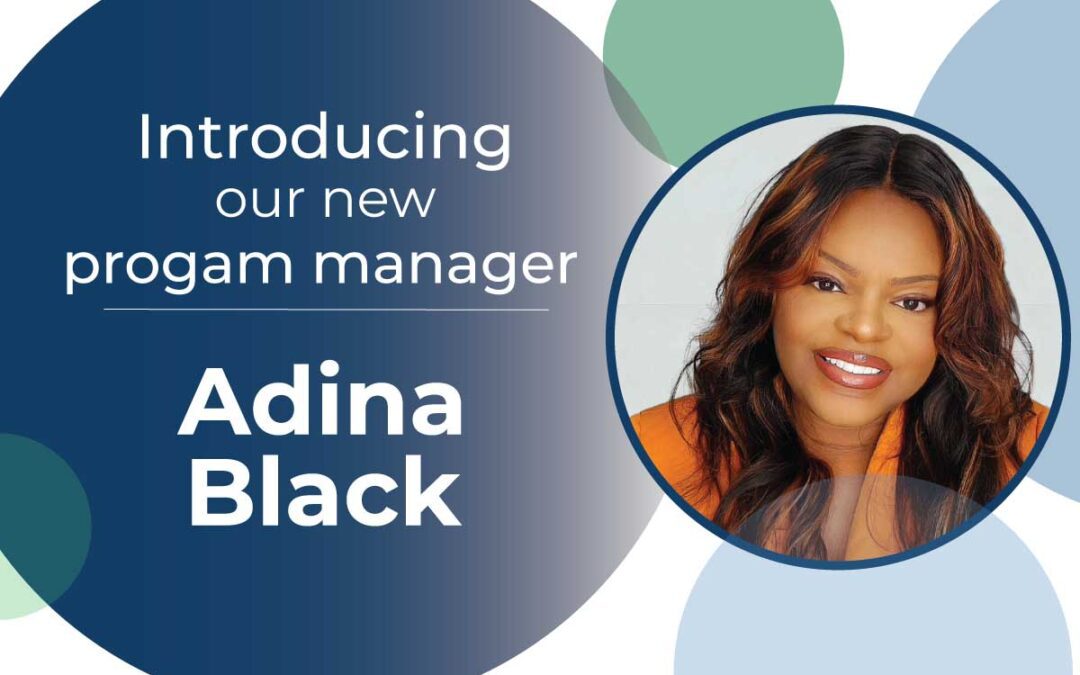
Adina Black joined MNPGA in December as program manager. In her role, Adina will work to mobilize communities to become more educated about gambling addiction and to understand how to help people access resources. Adina is excited about this opportunity and plans to draw from her creativity and skill in strategizing. “I look to develop a vision for the community about how we can meet the needs of problem gamblers,” says Adina.
Adina has considerable experience in community engagement. She previously worked at the North Carolina Translational and Clinical Sciences Institute, where she worked with community organizations to help them focus on their priorities and to advance the well-being of communities. Her efforts involved developing networks and coalitions around community issues, with an emphasis on developing collaborative partnerships.
In her first weeks at MNPGA, Adina has quickly gained an appreciation for the issue of problem gambling. “Learning how much it’s associated with substance use and other addictions but not receiving a proportionate amount of funding represents a challenge,” says Adina. “It seems like problem gambling has taken a back seat and not received the recognition it deserves.”
Adina has also learned about the way problem gambling has been viewed in different communities. “From my perspective as a Black woman, I think about the different kinds of behaviors that have been normalized in the Black community that I now recognize as people struggling with gambling issues. It’s been an eye-opener.”
We look forward to the impact Adina will make. Welcome to MNAPG, Adina!

Nov 29, 2023 | ABOUT MNAPG, ADVOCACY
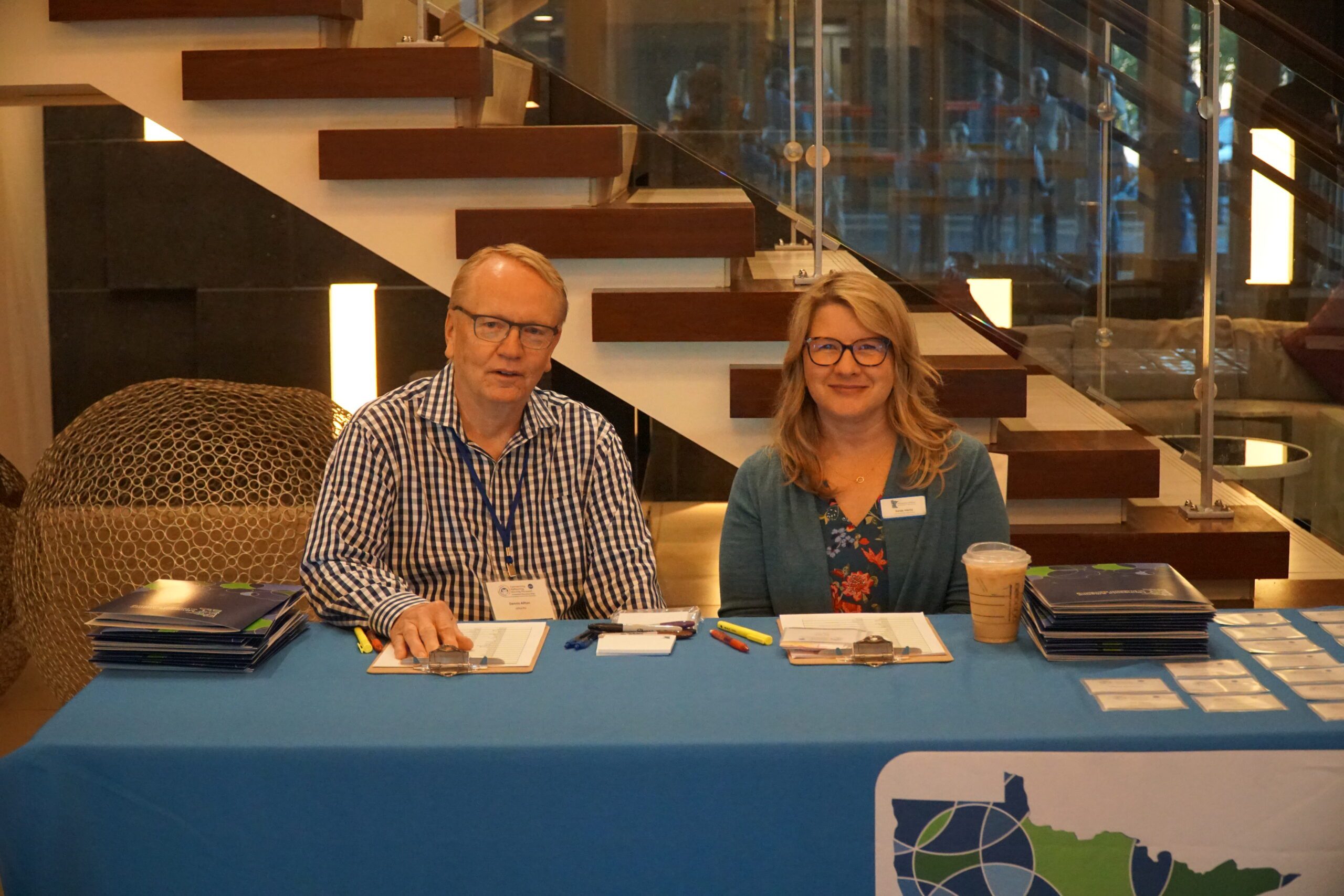 Sonja Mertz, MNAPG community educator, and volunteer Dennis Alfton prepare to welcome conference registrants.
 Cara Macksoud, CEO of Money Habitudes, and Alex De Marco, founder and CEO of MoneyStack, discussed the financial challenges facing problem gamblers. This included bringing awareness of financial counseling resources and tools available to support clinical work with clients, as well as learning how to use an assessment tool to have better conversations about money with clients.
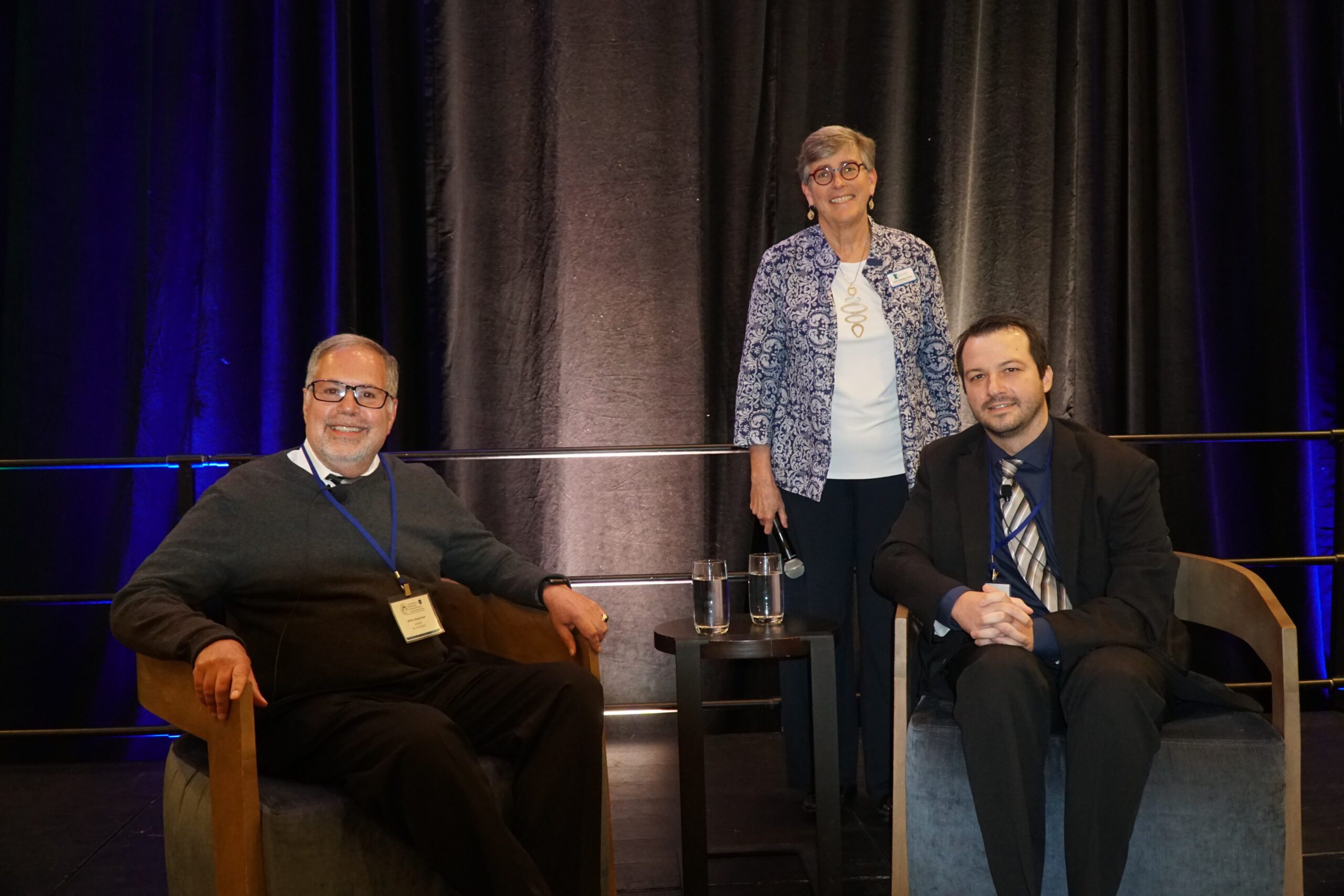 Susan Sheridan Tucker, executive director of MNAPG, welcomes Jeffrey Wasserman (left), judicial outreach and development director for the Delaware Council on Gambling Problems, and Brian Hatch, peer recovery specialist for Bettor Choice. Jeffrey and Brian, cohosts of The Addicted Gambler’s Podcast, made a live recording of the podcast and touched on a wide range of problem gambling issues with an emphasis on lived experience.
 Timothy Wong, MD, a professor of Psychiatry at the Jane and Terry Semel Institute for Neuroscience and Human Behavior at UCLA, gave two presentations. The first looked at cultural values of gambling among Asian American Pacific Islanders (AAPI) that contribute to gambling and problem gambling. The second presentation examined how the rapid expansion of sports betting has and will impact a person’s mind, body and brain functioning.
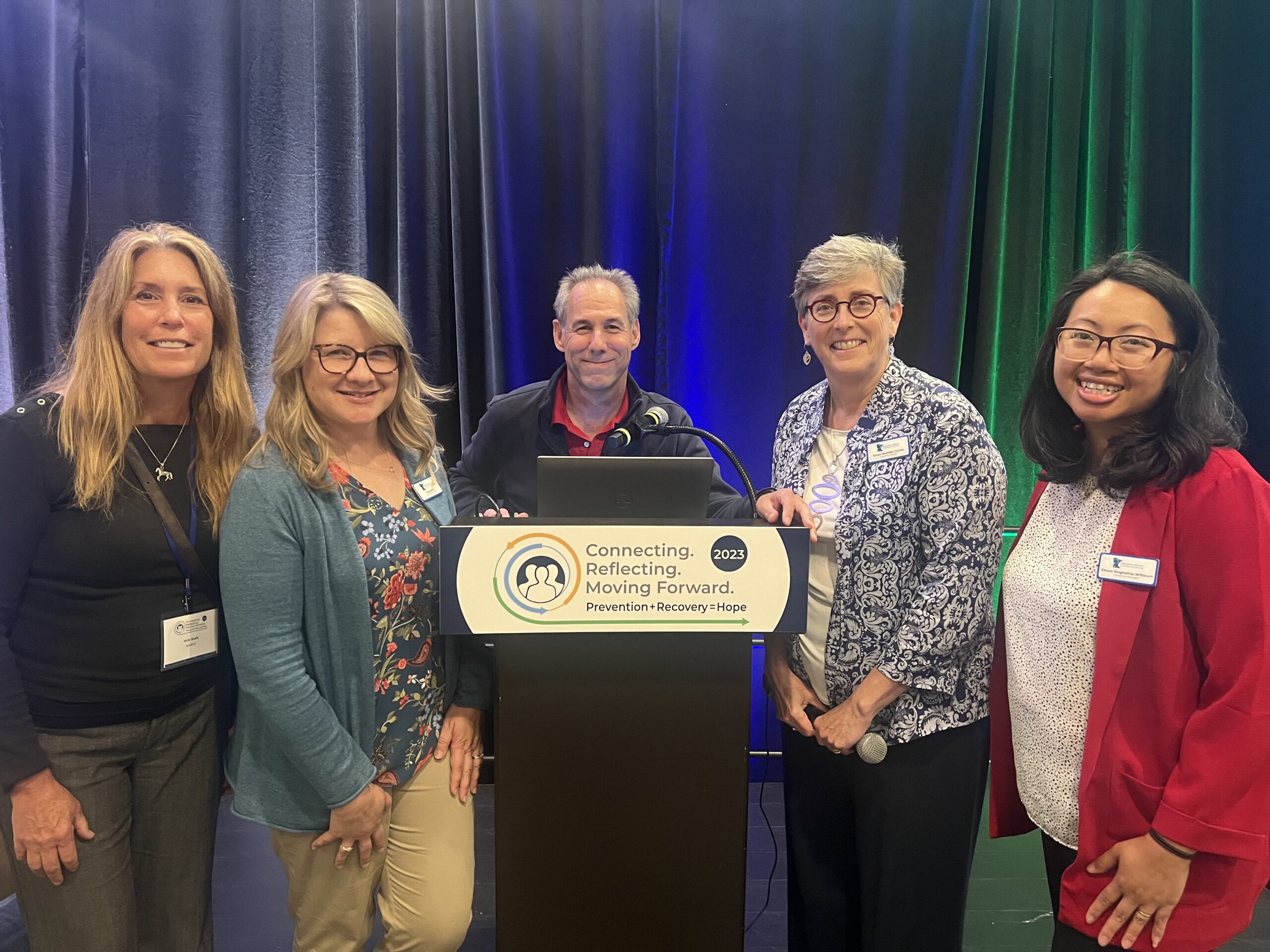 MNAPG staff gathered at the end of the conference. From left to right: Vicki Stark, contract designer, Sonja Mertz, MNAPG community educator, Bill Stein, contract writer, Susan Sheridan-Tucker, MNAPG executive director, and Eboun Wilbourn, MNAPG operations manager.
If you missed the conference or would like to take another look at a presentation, visit mnapg.org/conference, where you’ll find recordings of most of the presentations.