May 22, 2024 | RESEARCH
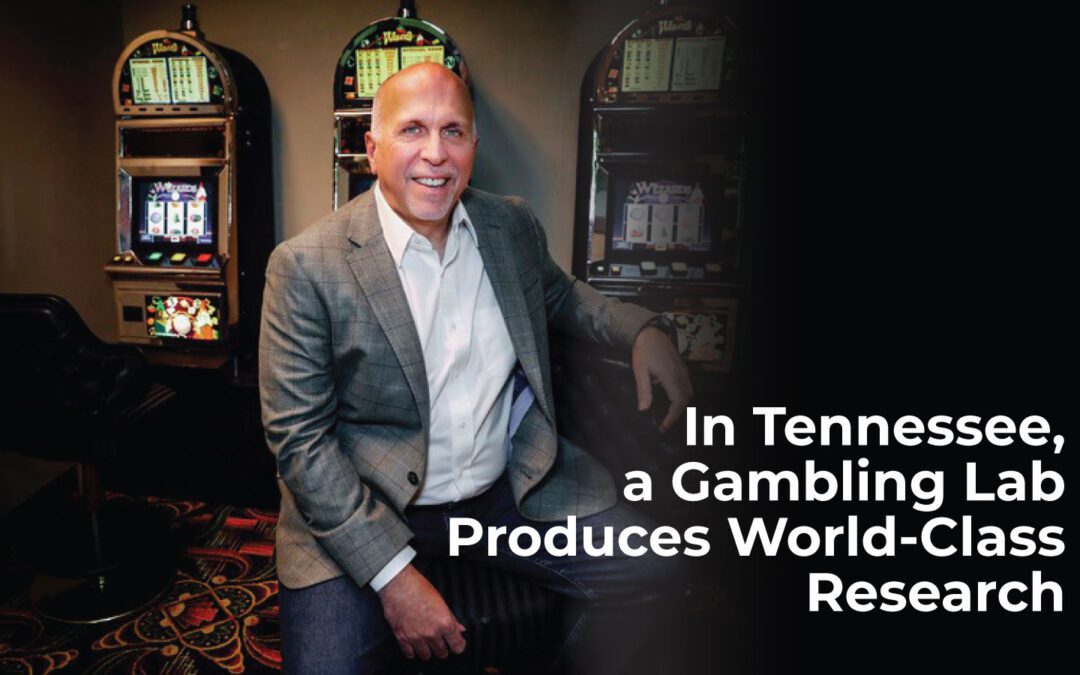
Inside an academic building at the University of Memphis, there’s a suite with a bank of slot machines and distinct casino carpeting. To the uninitiated, it seems every bit like a casino. But upon closer exam, it’s actually a gambling “lab,” a place where gambling behavior is studied and analyzed.
The lab is one of several ways that the Tennessee Institute for Gambling Education and Research (TIGER) conducts a wide range of gambling research. Along with other research approaches, such as community surveys and crowdsourcing (through the internet, social media and smartphone apps), TIGER research covers a wide range of topics, including:
• Addictive disorders
• Examining and mitigating health disparities in urban and rural communities
• Assessment, prevention and treatment
• Psychotherapy process and outcome research
• Validation of assessment tools
• Understanding the relations between gambling, substance use and other comorbid conditions
The research emphasizes real-world application. “We believe in reciprocity between the experimental approach and the clinical approach,” says James Whelan, Ph.D., professor and executive director of TIGER, which consists of two arms: a gambling clinic that provides treatment to people with gambling problems and a gambling lab where research takes place. “What we learn in the lab setting informs what we do in the clinical space. And many of our research questions originate from experiences with people.”
The clinic keeps a database of the approximately 1,800 people they’ve treated and can ask questions of the database that include factors such as a client’s risk factors and demographics. “It always comes back to our experiences learning from people with lived experiences,” says Dr. Whelan. “Our goal is to generate knowledge that we can apply to improve outcomes.”
TIGER was established in 1999 after Dr. Whelan had a client whose depression was caused by gambling. “I realized that nobody really knew how to approach treatment for someone with a gambling problem and that this was likely to be an increasing need in the community as casinos were built,” says Dr. Whelan. From that initial experience, TIGER has grown to become a national and international leader in addressing gambling disorders and in contributing to literature for prevention and assessment and treatment.
After 25 years of gambling research, what findings have been the most surprising? Dr. Whelan mentions two areas. One involves the effect of substance use on gambling. “We figured the effect of alcohol would mean taking greater risks and stupid gambling,” he says. “But we actually found that it’s the gambling experience itself that creates risky drinking behavior. It’s as much a psychological issue as it is a physiological one. Until someone has a blood alcohol level of close to .09 and over, it doesn’t seem to have any effect on risk-taking decisions.”
Another finding that Dr. Whelan found interesting was the impact of cognitive-based interventions coupled with at least one visit to Gamblers Anonymous (GA). “Our research demonstrated that those going to a single GA meeting along with cognitive treatment had better outcomes than those who didn’t attend any meetings.” Dr. Whelan surmises that the importance of seeing others who have the same issue — even just once — plays a key role.
As gambling addiction research continues to spread in various directions — a period that Dr. Whelan refers to as “the wild west” — there is much to be excited about at TIGER. Some areas under study include how to maximize the impact of peer recovery specialists and how responsible gambling messages should be tailored to individual demographics, including those engaging in ever-growing sports betting.
“One of our studies focuses on younger men and the type of messaging that’s appropriate for them,” says Dr. Whelan. “We’re finding that they won’t use the terms “therapy” or “help” but they might ask for a “class” they can attend to help with a gambling problem.”
Another study on young men focuses on the relationship between gambling and college success. TIGER research finds that the more they gamble, the more likely they are to drop classes, which threatens to jeopardize the money they’ve invested in college.
Looking ahead, Dr. Whelan says that the gambling field is at an interesting juncture with great opportunity. “There needs to be cooperation and shared responsibilities between gambling operators and regulators that’s guided by research,” he says. “And there has to be a healthy respect for individual responsibility.”
The Tennessee Institute for Gambling Education and Research (TIGER) is funded by the Tennessee Department of Mental Health and Substance Abuse Services. For more information, visit https://www.memphis.edu/gamblingclinic/.

May 17, 2024 | PROFESSIONALS, RESEARCH
Read the original article on The BASIS Here.
By John Slabczynski
Due to the recent proliferation of new investing applications , more laypeople are engaging in retail stock market trading. Though some people have profited from this activity, many others have experienced significant harms. For example, in one high profile case, a young retail trader died by suicide because he (mistakenly) believed he suffered a huge trading loss. Several interested parties have also raised concerns around the gamification of the stock market, especially in brokerage apps like Robinhood, combined with the rapid pace of today’s retail trading, which calls to mind casino gambling. To prevent harm, it is important to understand specific mechanisms driving harms from investing. Therefore, this week, The WAGER reviews a study by Leonardo Weiss-Cohen and colleagues that examined how problem gambling severity and market volatility influenced trading intensity.
What were the research questions?
(1) Does problem gambling severity relate to trading intensity? (2) Does volatility in the market affect trading intensity?
What did the researchers do?
The research team invited 604 participants from an online survey panel to complete a simulated trading task. All reported both gambling in the past year and having lifetime experience buying a financial asset like a stock or bond. The researchers formed four semi-equally sized groups based on their scores on the Problem Gambling Severity Index (PGSI); 1) recreational/no-risk gamblers, 2) low-risk gamblers, 3) medium-risk gamblers, and finally, 4) high-risk gamblers. In the trading task, each participant received a startup fund and had the opportunity to invest in six fictitious stocks on a computerized trading platform. Participants were randomly assigned to one of two conditions, one with high volatility (i.e., stock prices moving up and down frequently) and one with low volatility. The research team manipulated the stocks in both conditions so that they would both have the same overall return (i.e., potential profit), albeit with significantly more volatility in the high volatility condition. To better replicate real-world behavior, participants received financial bonuses based on the results of their trading, with better performance resulting in higher bonuses. The researchers studied how problem gambling severity related to the intensity with which participants made stock trades, and whether participants traded more intensely when faced with high market volatility.
What did they find?
Contrary with other research, participants with more severe problem gambling did not trade more intensely. However, volatility did shape trading intensity; participants in the high volatility condition made 17% more trades compared to participants in the low volatility condition. This effect remained regardless of problem gambling severity and while controlling for financial literacy, overconfidence, age, and gender. Interestingly, exploratory analyses suggested that problem gambling severity may play a moderating role in predicting trading frequency, but only outside the highest levels of risk. Specifically, in all four of the gambling groups, participants in the high volatility condition traded more intensely than those in the low volatility condition; however, this difference was especially apparent in the three lowest-risk groups (see Figure).
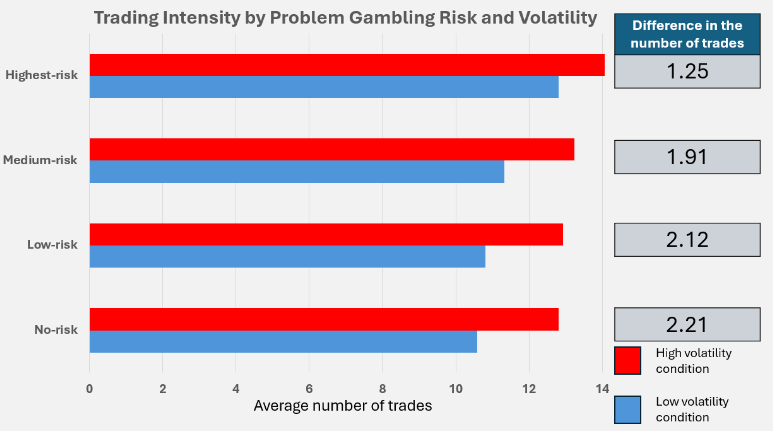 Figure. Displays the mean number of trades for each PGSI category between conditions from exploratory analyses. The boxes on the right represent the average difference between participants in the high volatility vs. low volatility conditions for each level of PGSI severity.
Why do these findings matter?
These findings are important for two reasons. Namely, they suggest that volatile assets such as cryptocurrencies or high-risk stocks (e.g., penny stocks) encourage more intense, gambling-like trading than less volatile assets mutual or index funds. This suggests that the gamification of brokerage apps like Robinhood and Webull may be putting more users at risk than was initially expected. Additionally, because the effects of volatility were strongest among no-risk participants, messaging efforts should potentially target lower-risk traders and gamblers as well. Often, outreach messaging focuses on those most at-risk in the population, yet this study suggests that those at lower-risk might actually be experiencing more harms from trading.
Every study has limitations. What are the limitations in this study?
This study occurred in a simulated environment in which participants did not trade with their own personal money, so the external validity of this study is in question. Additionally, compared to the average online brokerage account, this study provided relatively modest amounts of capital to trade with. It is quite likely that higher stakes with more money could influence the results of this study, possibly by encouraging more risky trading.
For more information:
Individuals who are struggling with problem gambling may find support through Gamblers Anonymous. They offer in-person and virtual meetings. Others who are concerned about their trading or gambling behavior may benefit from visiting the website for The National Council for Problem Gambling. Additional resources can be found at the BASIS Addiction Resources page.
—John Slabczynski
Figure. Displays the mean number of trades for each PGSI category between conditions from exploratory analyses. The boxes on the right represent the average difference between participants in the high volatility vs. low volatility conditions for each level of PGSI severity.
Why do these findings matter?
These findings are important for two reasons. Namely, they suggest that volatile assets such as cryptocurrencies or high-risk stocks (e.g., penny stocks) encourage more intense, gambling-like trading than less volatile assets mutual or index funds. This suggests that the gamification of brokerage apps like Robinhood and Webull may be putting more users at risk than was initially expected. Additionally, because the effects of volatility were strongest among no-risk participants, messaging efforts should potentially target lower-risk traders and gamblers as well. Often, outreach messaging focuses on those most at-risk in the population, yet this study suggests that those at lower-risk might actually be experiencing more harms from trading.
Every study has limitations. What are the limitations in this study?
This study occurred in a simulated environment in which participants did not trade with their own personal money, so the external validity of this study is in question. Additionally, compared to the average online brokerage account, this study provided relatively modest amounts of capital to trade with. It is quite likely that higher stakes with more money could influence the results of this study, possibly by encouraging more risky trading.
For more information:
Individuals who are struggling with problem gambling may find support through Gamblers Anonymous. They offer in-person and virtual meetings. Others who are concerned about their trading or gambling behavior may benefit from visiting the website for The National Council for Problem Gambling. Additional resources can be found at the BASIS Addiction Resources page.
—John Slabczynski

Apr 18, 2024 | RESEARCH, SPORTS BETTING, YOUTH GAMBLING
Read the original article on The BASIS Here.
Written by: Kiran Chokshi
Editor’s note: This month’s WAGER was written by Kiran Chokshi, a high school senior from New York who’s interested in research about sports betting.
Many of us participated in team sports when we were younger, and some still play. Gambling has become increasingly present in sports in recent years as a result of the U.S. Supreme Court’s May 2018 decision, which expanded sports betting in the U.S. Researchers have begun to examine gambling behaviors among athletes themselves, and an open question is whether adolescent team sport participation might make one more likely to gamble later in life as a young adult. This week, The WAGER reviews a study by Brendan Duggan and Gretta Mohan which examined the associations between young people’s gambling behaviors and participation in team sports.
What were the research questions?
(1) Does exposure to a team sports environment in late adolescence lead to a greater likelihood of engagement in gambling as a young adult? (2) Are there gender differences in this relationship?
What did the researchers do?
The researchers collected data from Growing Up in Ireland (GUI), a longitudinal study with 2 waves of data for 5,190 participants born in 1998. Participants were asked in both waves (at age 17 or 18 in 2015 – 2016, and at age 20 in 2018 – 2019) if they participated in team sports, and also if and how often they participated in gambling activities online or in person. Participants who reported gambling once a month or more were considered to be regular gamblers.
What did they find?
The researchers found that about one-third of participants took part in team sports, and males were more likely than females to play team sports and gamble at both waves. For both males and females, team sport participation significantly predicted future gambling engagement, both in terms of online gambling and regular gambling behavior. Participants who took part in team sports at both ages 17/18 and at age 20 had 2.44 higher odds of engaging in online gambling and 2.99 higher odds of being a regular gambler at age 20, when compared to participants who did not engage in team sports at either wave. When looking at the sample of males only, these relationships were stronger; males who participated in team sports at both waves had 3.8 higher odds of online gambling and 4.02 higher odds of gambling regularly, when compared to males who did not play team sports in both waves.
 Figure. Figure shows the percentage of participants engaging in online or regular gambling based on their participation in team sports. Total N = 5,190. Adapted from Duggan & Mohan (2022).
Why do these findings matter?
Many professional sports teams and leagues are embracing betting and collaborating with sportsbooks, with some going so far as to sign sponsorship deals. Although gambling is prohibited to some extent among athletes at most levels of competition, problem gambling is a potential risk among amateur and professional athletes. The results from this study highlight how adolescent team sport participation predicts future online and land-based gambling, which could potentially lead to Gambling Disorder. Interestingly, many prevention groups, such as the New York State Office of Addiction Services and Supports, recommend participation in team sports, clubs, and community groups as a positive outlet; however, this research suggests that kids who are playing sports might benefit from targeted public health programs about problem gambling. Future research should test the effectiveness of these prevention programs among amateur and elite athletes alike.
Every study has limitations. What are the limitations in this study?
Although the sample size in this study was large, all of the participants were from Ireland, so it’s unclear if these findings are generalizable to people in other countries with different gambling practices. The data in this study was also self-reported, so might under- or over-report actual gambling behaviors. A more specific limitation of the study is that it did not track the amount of gambling spending per person, so the authors were unable to determine how much money each participant spent or lost while gambling.
For more information:
If you or anyone you know has a gambling problem, visit the National Council on Problem Gambling for tools and resources to help. Resources for preventing underage gambling are also accessible through YouthDecide. For additional resources, including gambling and self-help tools, visit our Addiction Resources page.
— Kiran Chokshi
Figure. Figure shows the percentage of participants engaging in online or regular gambling based on their participation in team sports. Total N = 5,190. Adapted from Duggan & Mohan (2022).
Why do these findings matter?
Many professional sports teams and leagues are embracing betting and collaborating with sportsbooks, with some going so far as to sign sponsorship deals. Although gambling is prohibited to some extent among athletes at most levels of competition, problem gambling is a potential risk among amateur and professional athletes. The results from this study highlight how adolescent team sport participation predicts future online and land-based gambling, which could potentially lead to Gambling Disorder. Interestingly, many prevention groups, such as the New York State Office of Addiction Services and Supports, recommend participation in team sports, clubs, and community groups as a positive outlet; however, this research suggests that kids who are playing sports might benefit from targeted public health programs about problem gambling. Future research should test the effectiveness of these prevention programs among amateur and elite athletes alike.
Every study has limitations. What are the limitations in this study?
Although the sample size in this study was large, all of the participants were from Ireland, so it’s unclear if these findings are generalizable to people in other countries with different gambling practices. The data in this study was also self-reported, so might under- or over-report actual gambling behaviors. A more specific limitation of the study is that it did not track the amount of gambling spending per person, so the authors were unable to determine how much money each participant spent or lost while gambling.
For more information:
If you or anyone you know has a gambling problem, visit the National Council on Problem Gambling for tools and resources to help. Resources for preventing underage gambling are also accessible through YouthDecide. For additional resources, including gambling and self-help tools, visit our Addiction Resources page.
— Kiran Chokshi

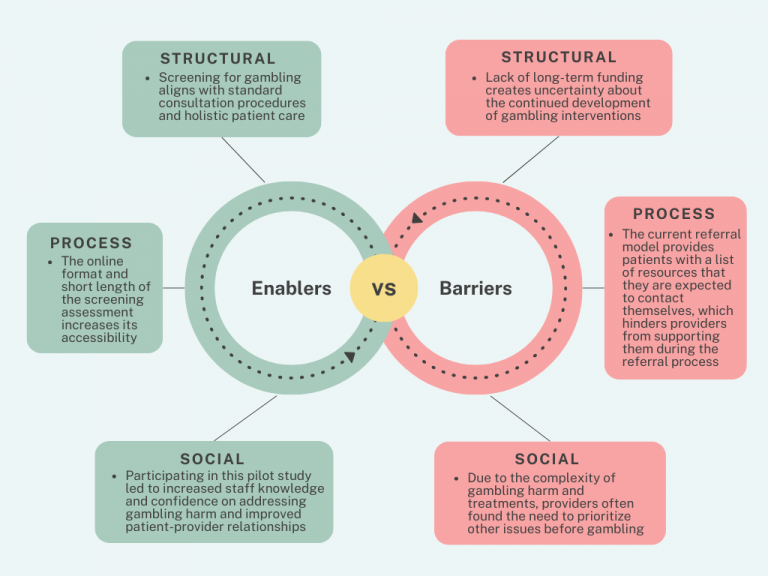 Figure. An overview of key enablers and barriers to the implementation of the gambling harm screening and referral model.
Why do these findings matter?
Integrating problem gambling screening in primary healthcare and community service settings can help to support holistic patient care procedures, increase access to gambling support services, and mitigate gambling harm within communities. Primary care providers who are involved in discussing gambling with their patients can also play a role in
Figure. An overview of key enablers and barriers to the implementation of the gambling harm screening and referral model.
Why do these findings matter?
Integrating problem gambling screening in primary healthcare and community service settings can help to support holistic patient care procedures, increase access to gambling support services, and mitigate gambling harm within communities. Primary care providers who are involved in discussing gambling with their patients can also play a role in 
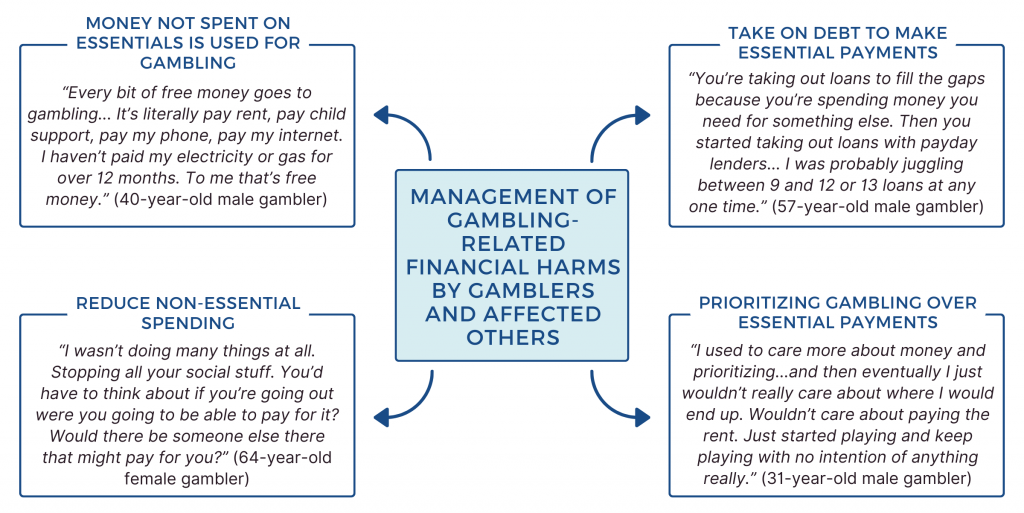 Figure. Quotations about the management of gambling-related financial harms among n =21 gamblers and affected others.
Why do these findings matter?
These findings demonstrate the complexity of gambling-related financial harms experienced by gamblers and affected others. Current messaging around the use of
Figure. Quotations about the management of gambling-related financial harms among n =21 gamblers and affected others.
Why do these findings matter?
These findings demonstrate the complexity of gambling-related financial harms experienced by gamblers and affected others. Current messaging around the use of 
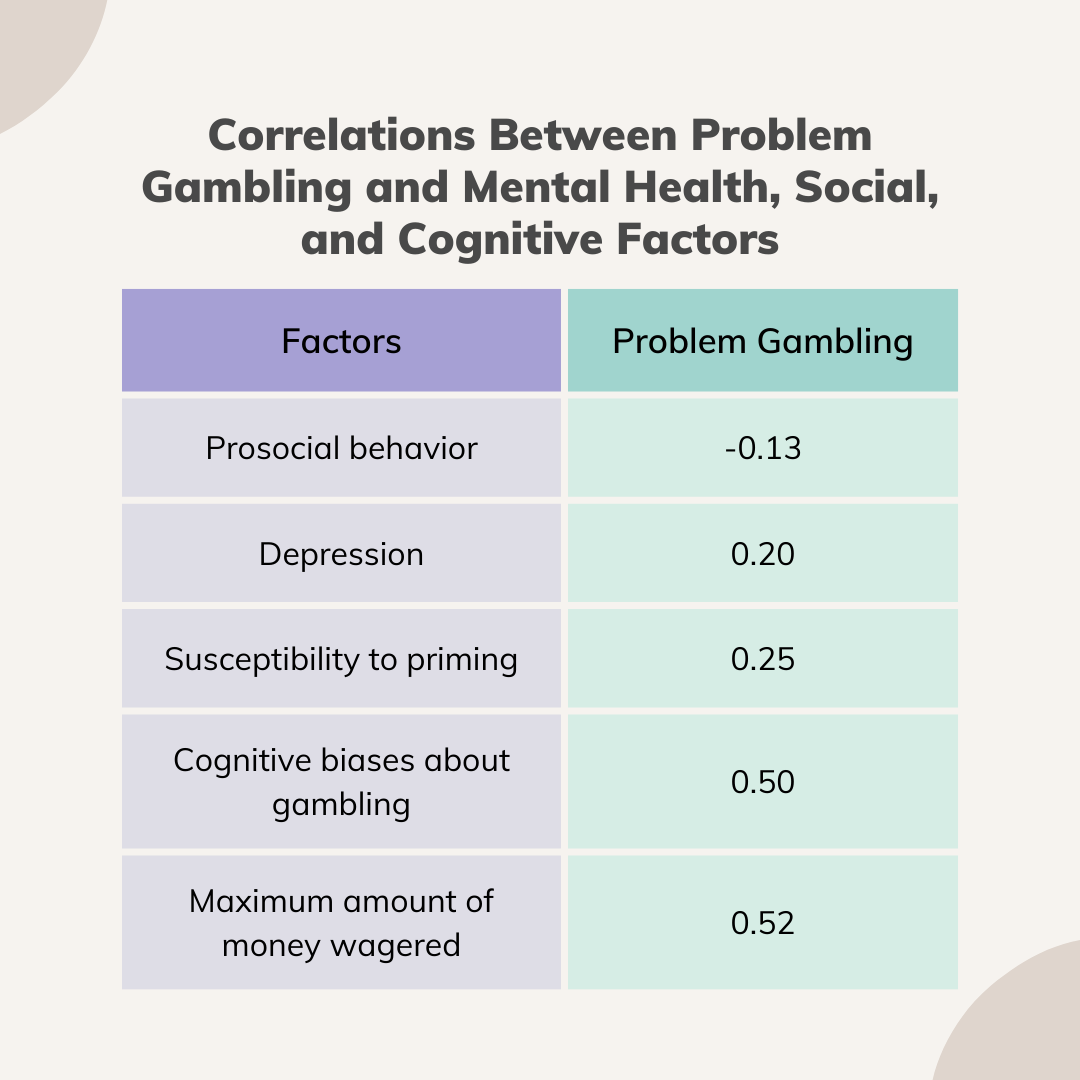 Figure. The correlation coefficients for problem gambling and several mental health, social, and cognitive factors. Correlations are ranked from smallest to largest. Values closer to 0 indicate a weaker relationship, while negative values closer to -1 indicate a stronger negative relationship and positive values closer to +1 indicate a stronger positive relationship. All correlations were statistically significant.
Why do these findings matter?
The findings add more evidence to the notion that people with Gambling Disorder may be at
Figure. The correlation coefficients for problem gambling and several mental health, social, and cognitive factors. Correlations are ranked from smallest to largest. Values closer to 0 indicate a weaker relationship, while negative values closer to -1 indicate a stronger negative relationship and positive values closer to +1 indicate a stronger positive relationship. All correlations were statistically significant.
Why do these findings matter?
The findings add more evidence to the notion that people with Gambling Disorder may be at