Aug 7, 2024 | RECOVERY, STORIES
My gambling addiction has driven me to do things I never thought I’d do: write bad checks, max out credit cards and make up stories about why I needed to borrow money from my family. But most upsetting to me was that my addiction caused me to steal from my parents' retirement accounts.
That’s really the point at which I knew I needed to get help.
It wasn’t always that way. The first time I gambled was when I went to a casino when I was 18. I’d go a few times a year with friends and family. It was a fun thing that we did together and I never had an issue.
Then, when I was in my late 20s, I started going to the casinos by myself as a way of dealing with my feeling embarrassed about being without a significant other when all my siblings were getting married and having kids. It allowed me to tell everyone I had something to do so they wouldn’t feel sorry for me. They didn’t know I was alone.
I began going every weekend and not just to spend three or four hours. I’d sometimes spend the whole night. Then I started going during the week, and would often change clothes in the car on my way to work from the casino.
My money started to run out, and that’s when I began to max out my credit cards and write bad checks. I learned about ways to get money in which to gamble, including payday loans.
I knew I had to get away from gambling because I’d end up in jail for writing bad checks. I prayed that death would take me away and felt like I was such a loser.
I thought a change of scenery would help me so I moved to Montana to be with my sister. At first, I didn’t gamble, partly because I didn’t have a job. Then I started working and making money and began to venture out from my sister. I learned that bars, restaurants and gas stations had casinos, including Keno, which I had never played before. I started doing that more and more on my way home from work.
I decided to end my time in Montana, partly concerned that my sister would learn what I was doing with my time and money because it was a small town. I called my old boss in back in Minnesota and lucked into a job.
But I wasn’t back in Minnesota for more than a week before I was back at the casinos. I had worked to clean up my debts but now I was going right back into it.
About six months later, I did what I could never have imagined doing. I waited for my parents to leave the driveway as they were heading out of town. I went into my mother’s bedroom and opened up the checkbook for their investment account. I wrote a check out to myself. My handwriting was very similar to my mother’s.
Aug 7, 2024 | ADVOCACY
Looking to increase the visibility of gambling addiction in the eyes of the state? If so, Minnesota’s Compulsive Gambling Advisory Committee, which meets virtually every other month, wants you.
The committee consists of 14 positions, five of which are providers. The remaining positions are reserved for those who have an interest in prevention and increasing awareness of gambling disorder. This includes those with lived recovery experience and people from community agencies who work with populations vulnerable to gambling addiction. Beyond the 14 positions, anyone from the general public is welcome to be present.
“Our biggest challenge is getting more voices to the committee meetings,” says Craig Johnson, LADC, director of the Gambling Treatment Program at Club Recovery and chair of the committee. “We’re working to revitalize previous connections, including those with the Minnesota Lottery and Minnesota Department of Corrections. We want to bring together a wide variety of voices that can speak to the gambling treatment and awareness needs of the community.”
The committee’s charter, recently updated by Minnesota’s Department of Human Services (DHS) for the first time since 2013, is to provide expertise to DHS on the nature of community needs related to treatment, prevention and awareness. The committee also weighs in on legislative efforts and was quite involved with recent sports gambling legislation. [The legislation didn’t pass but will be revisited next year].
Another goal of the committee is to raise gambling disorder to a more equal footing with substance use disorder within the state’s structure. “We only have 19 gambling treatment providers whereas there are approximately 2,500 LADCs in the state who help those with alcohol and substance use disorder,” says Craig. “We need to have greater numbers of gambling providers to ensure we can adequately assess and treat those with gambling disorder.”
Craig is encouraged by the increased structure put forward by DHS to manage the state’s gambling program. He notes there are now five people from the state dedicated to working with the committee, providing more consistency and continuity to address addiction treatment in Minnesota.
Committee meetings are open to anyone who’s interested. However, only official committee members can vote.
If you or someone you know is interested in participating in committee meetings, please email Craig Johnson at Cjohnson@clubrecoveryllc.com for the Zoom link and related information.
Aug 7, 2024 | ABOUT MNAPG, ADVOCACY
Sonja Mertz, community educator, periodically reports on MNAPG outreach efforts. Here’s her latest account.
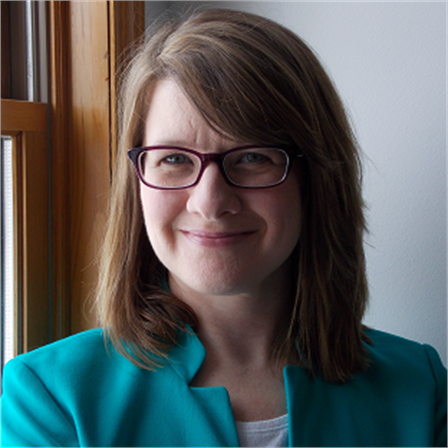
Sonja Mertz, Community Educator
Part of my role as community educator includes providing presentations at professional conferences. Audiences at these events include mental health and substance use professionals, educators, administrators and other people who are familiar with, or who have heard of, problem gambling and gambling addiction. At the end of each presentation, I offer time for comments or questions. It’s common for this request to be met with blank stares. Occasionally, someone will ask a question or provide a comment about the gambling behavior they have seen in their line of work.
This past year, my audiences have expanded to include middle school students, gaming industry staff, recovery center staff, people in the military and clients in outpatient addiction recovery. This increased diversity of the folks listening to my presentations has increased audience participation.
With middle school students, the feedback lands in completely opposite directions. They either stare blankly at me and go completely quiet when I ask if they have any questions or they are fully engaged and gladly offer questions or comments. It was during a presentation in Babbit that an eighth grader informed me that an image that I had been using to talk about loot boxes in video games was incorrect. I made sure to change it as soon as possible!
During my presentation at the Military Mental Health Conference at Camp Ripley, a casino employee challenged my suggestion of using cash as a way to reduce the harm of gambling. She talked about how some of her customers bring in stacks of cash and stay until the stack is wiped out. She also expressed her concern about customers who she knows are spending all of their paychecks at the casino and wanted to know what she, as a casino employee, could do.
It was during my most recent presentation to clients of an outpatient treatment group that I was able to witness the direct impact of the information that I push out to those who will listen. These are people who are living with addictions and are going through the recovery process. They have experienced the trauma, mental health issues and co-occurring disorders that I have so diligently researched. Their stories about when their addictions started, their experience with gambling and their sincere concerns about friends and family who were dealing with gambling addiction have really impacted me.
As sports betting and gambling continue to become normalized and Minnesotans recognize how gambling behavior impacts their communities, the need for reliable information increases. The MNAPG staff is seeing a sharp increase in requests for presentations. I am already scheduled in the next few months to present to older adults at senior centers and social services staff at their annual training. I look forward to receiving more feedback from people in the real world – those who are directly impacted by gambling.
Aug 7, 2024 | ABOUT MNAPG, ADVOCACY
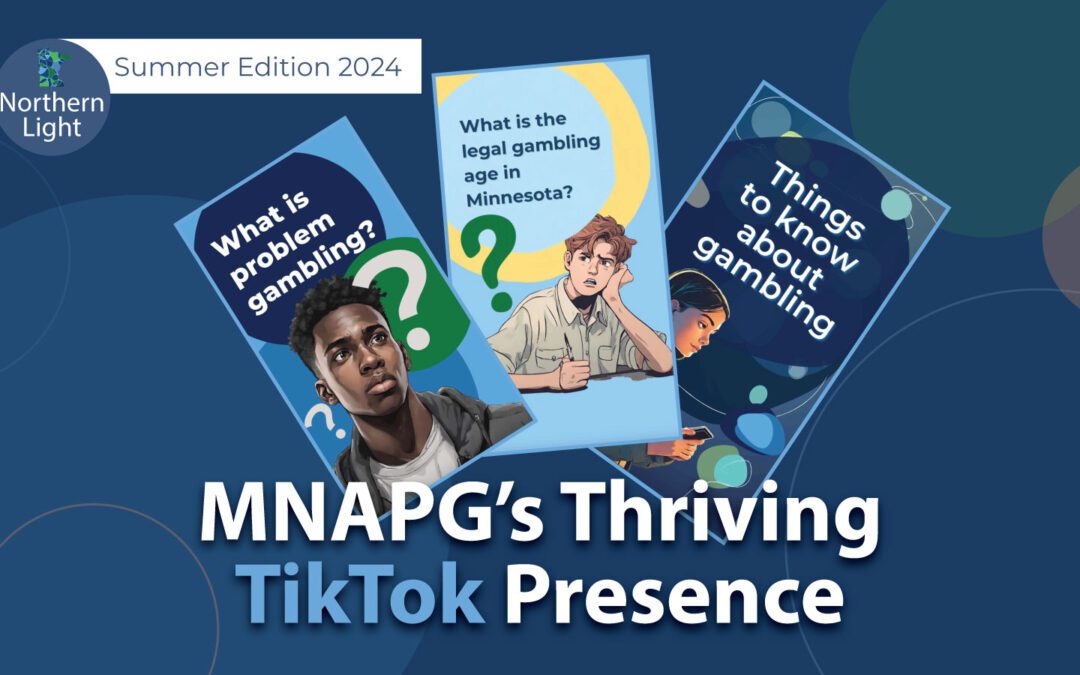
MNAPG added TikTok to the ranks of its social media channels last fall. Northern Light sat down with Rhiana Stark of Evans-Stark Design, to learn more about this effort.

Rhiana Stark, Marketing Specialist
NL: When did MNAPG gain its presence on TikTok?
RS: Our TikTok was established in September of 2023. Our first video was an introduction to who MNAPG is and what we do.
NL: How many followers do we have to date?
RS: We have 1,783 followers as of July 1, 2024, and we have made 31 posts as of that date.
NL: What are the primary goals for our TikTok strategy?
RS: There are two primary goals: raising awareness about problem gambling to a young demographic and providing resources for users looking for help.
Raising awareness includes educating younger people about what problem gambling is and what it looks like, how problem gambling is similar to addictions they are more likely to take seriously and have indirect or direct experience with, such as alcohol and drug addiction, and the danger of activities that don’t present as gambling but introduce and encourage gambling behavior, such as lottery tickets and loot boxes. We published MNAPG’s PSA on TikTok that emphasizes the similarity between gambling addiction and other addictions. (See https://www.tiktok.com/@mnapg/video/7303622776265461023.)
As far as providing resources for users that are looking for help, our TikTok content promotes the comparative tool survey [an individual’s betting behavior is compared against the behavior of other Minnesotans], the Minnesota problem gambling helpline, Gamban and BetBlocker, along with mental health-focused meditations and “scrolling breaks.”
NL: What are the demographics we hope to reach with TikTok?
RS: TikTok is a wonderful platform to reach an audience that, prior to our involvement on TikTok, was a little out of reach. The average age of TikTok users is 16–24, which is the general range we hope to reach with our content.
NL: What types of content have you found to be most effective for engaging our audience on TikTok?
RS: Users respond well to new information and TikTok has become a treasure trove for people around the world to learn new things without doing an extensive amount of their own research. When we publish educational content about gambling or gaming we get a lot of “saves,” which means people are bookmarking the video to return to it later or saving it to their phone. We also get a lot of positive engagement with our meditation videos. The dependence that people in my [younger] generation have on their phones is not lost on me. In some ways, I think people are waiting for something like our meditation videos to come up as they scroll to remove them from their content consumption, and I see that in the comments and quality of engagement on those particular videos.
NL: Can you share a particular success story or a campaign that performed exceptionally well on TikTok?
RS: I wish I had a definite and simple answer to this but in reality, most of our campaigns do very well across the board. What I will say is that users on TikTok, especially the younger audience we speak to, are not usually looking for our content. We come up on their feed when they are probably trying to detach and zone out, and we are talking about things that may be difficult, boring or threatening to their way of life. Kids usually don’t want to be told to act with caution, think twice before taking actions online or limit the amount of time they spend doing something that brings them instant gratification. And they let us know in the comments. So, I don’t look at those things to measure our success or impact. I try to read between the lines. I scroll through the resistant-natured comments and once in a while, I'll find a user that just says “thank you” or if we’re really lucky they’re asking how to get help. So even though we don’t have users overloading our analytics with positive replies, we are a present, consistent, neutral and reliable source of education and resources for those who need help, whenever they’re ready – I think that makes our efforts successful.
NL: What are some of the ways we assess our performance on TikTok?
RS: We measure engagement metrics similar to the way we monitor our other social platforms. This includes how long users are watching our videos, how many likes we’re getting, saves, reposts, shares, etc. We garner an average of 123,000 views per video that we post and promote.
NL: What strategies do we use to grow our follower base on TikTok?
RS: We are still building our community on TikTok, which we try to accomplish alongside our goals of spreading education, awareness and available resources. Our videos are intentionally created to capture the user’s imagination. On a platform where we are competing for views against creators that offer an almost unlimited pool of entertainment, it’s important to create videos that are visually appealing as well as educational and helpful. This is why so many of our videos are animated with graphics that mimic our brand identity and play an engaging sound to accompany the visual components.
Aug 7, 2024 | SPORTS BETTING
Ads for parlay bets are pervasive on sports television. And, not surprisingly, they have become quite popular. How do these bets work, why are they so popular and what risks do they hold, particularly for problem gamblers?
In sports betting, a parlay bet is when a bettor makes two or more bets and combines them into one wager. Depending on the sportsbook or the region, these bets may be called “accumulators” or “multis.”
The gambler must win every small bet to win the parlay bet, and losing just one of the smaller bets loses the parlay. A sportsbook typically provides larger payouts as more games are added to each parlay. Parlay bets are riskier since they comprise many individual chances but give a bigger payout if all individual wagers win.
As an example, someone might bet on the Minnesota Vikings and Chicago Bears to win and the Green Bay Packers to lose on a given weekend. All three of these things must happen for the gambler to win money.
Bettors like parlays because they can generally risk less and win more. This is because they perceive less risk. The more legs of a parlay you add, the higher the payout but the more difficult it is to win the parlay.
Many people enjoy the high-risk, high-reward wager and may believe one big parlay win can change everything. This is particularly concerning for problem gamblers chasing losses who think that one bet will allow them to recoup their losses and repay any debt they’ve accumulated.
Same game parlays (SGPs) are a type of parlay that allows the bettor to combine multiple outcomes from the same game. For example, an SGP allows gamblers to bet on a quarterback’s passing yards, a receiver’s receiving yards and total points allowed by a team’s defense.
One advantage from a bettor’s perspective is that they need only watch a single game to see how their wager is faring rather than having to monitor multiple games.
As SGPs have exploded in popularity, almost all large sportsbooks have added them to their offerings. Thanks to heavy advertising before and after national games, SGPs have become more popular than any other betting type.
Given the odds and structures of SGP bets, a bettor is hard pressed to come out ahead over the long term. For bettors at risk for problem gambling, it can be tempting to bet on more and more parlays over time, which can be very dangerous.
Dr. Timothy Fong, a clinical professor of psychiatry at UCLA’s Institute for Neuroscience and Human Behavior, notes particular concerns with SGPs. “From what I understand, the same game parlay now is the dominant form of sports betting wager. In my mind that is like a slot machine bet. It’s not like a single bet on a winner or loser.”
The marketing of parlays by sportsbooks, particularly same game parlays, has increased as they are especially profitable. Popular sportsbooks place pre-built SGPs and parlays on their home pages, often suggesting parlays that relate to the home team, a popular athlete or recognizable sports personality.
Unfortunately, less sophisticated bettors don’t appreciate or understand the edge that’s baked into the odds for sportsbooks. Sports gamblers, as well as those who work with problem gamblers, should understand the danger of these types of bets.